






This is My PBC

What is This is My PBC?
Getting to know your PBC is the first step to take charge of your PBC journey
This is My PBC is a disease awareness initiative developed and funded by Ipsen, that seeks to raise awareness of the need for people living with PBC to know more about their disease and understand that everyone’s experience is different – and valid. By taking a personalized approach to your PBC management, you can empower yourself with the knowledge to have meaningful conversations with your healthcare professional, and play a more active role in your PBC management and care. You may be unique, but you are not alone.
What is PBC fatigue?
If you are living with PBC, if you feel exhausted, your body feels like lead, you sometimes find it difficult to talk to people, you find yourself making compromises or trade-offs in everyday life, or you have a tiredness that doesn’t improve with sleep, you are not alone. You are one of thousands of people living with the hidden weight of PBC Fatigue. Click here to download the guide on discussing PBC fatigue with your doctor. Or visit one of the patient support organizations listed on this page.
Fatigue is a common and debilitating symptom of PBC, affecting up to 80% of people living with the disease, with up to 20% experiencing severe fatigue.
The PBC community are writing personal, powerful letters to their fatigue, giving voice to experiences that are too often unseen or misunderstood. By turning invisible struggles into visible words on a page, these letters create a lasting record of fatigue’s impact.
Bridging a gap between individual experience and clinical reality, underscoring that PBC fatigue is a complex, multi-dimensional condition and not just tiredness.
Our mission
We are on a mission to share the stories of as many people living with PBC fatigue as possible, turning the invisible experience of fatigue into a powerful and visible expression of what life with the condition is really like. People living with PBC are invited to write a letter to their fatigue, putting into words experiences that are too often unseen or misunderstood. By sharing these personal stories, we can create a lasting record of fatigue’s impact, raise awareness of the realities of living with PBC, and ensure that those affected feel seen and heard. Download the template and share your letter on Facebook, Instagram, or TikTok with the hashtag #ThisIsMyPBC.
Meet Jo, Gill and Wendy, living with PBC
Although they share the same diagnosis, their journeys with PBC are deeply personal. Discover their stories and see how they are making the invisible visible. Take charge of your own journey by learning more about the condition and speaking openly with your doctor.
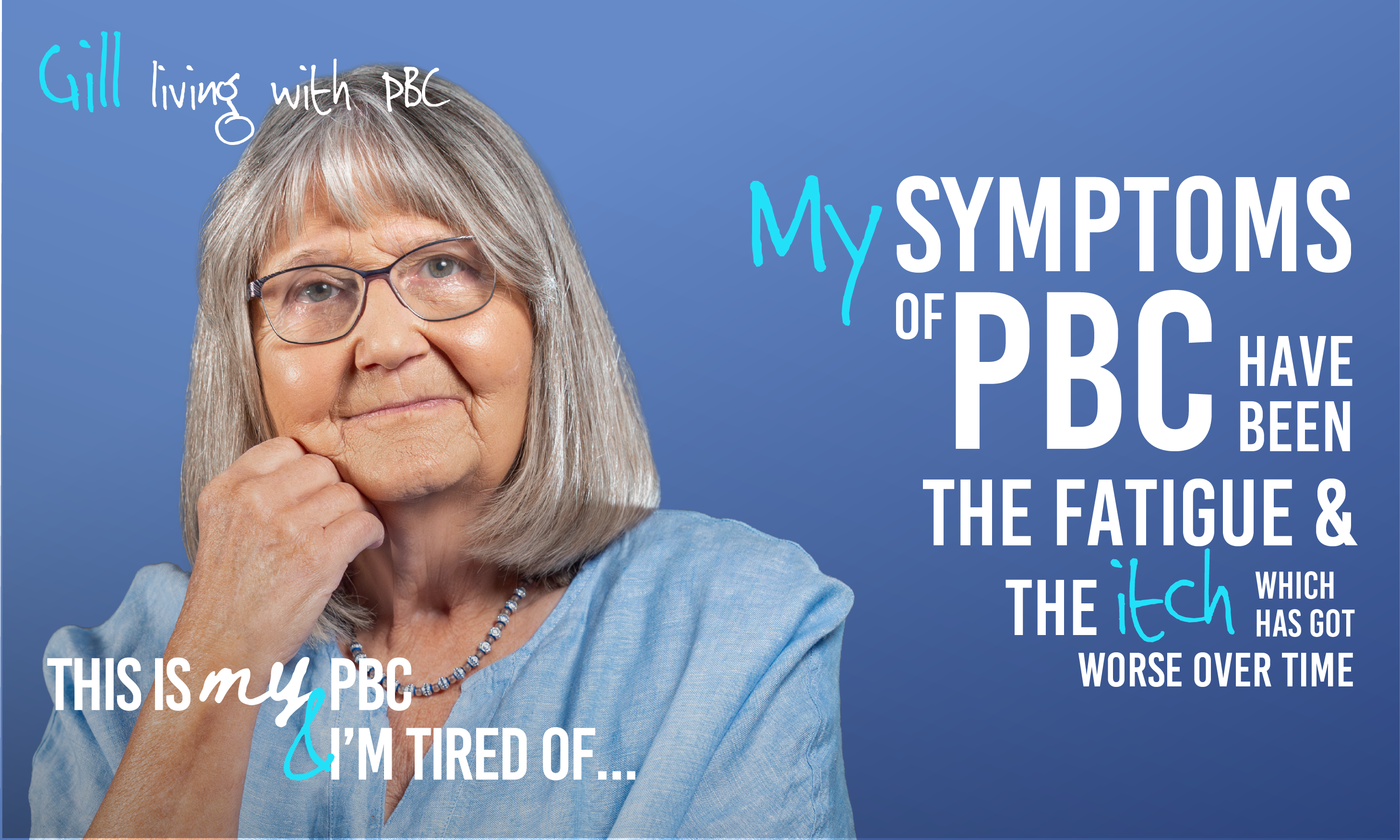
Meet Gill
For over 20 years, Gill has navigated life with PBC while balancing a career, family, and dedicated volunteer work, all while managing the invisible symptom of fatigue. After years of feeling that fatigue was whispering doubts about her potential and clouding her conversations, Gill has decided to put her words on paper, making the invisible visible. She is sharing her story to ensure others living with PBC feel empowered and refuse to let the condition define their limits.
Learn more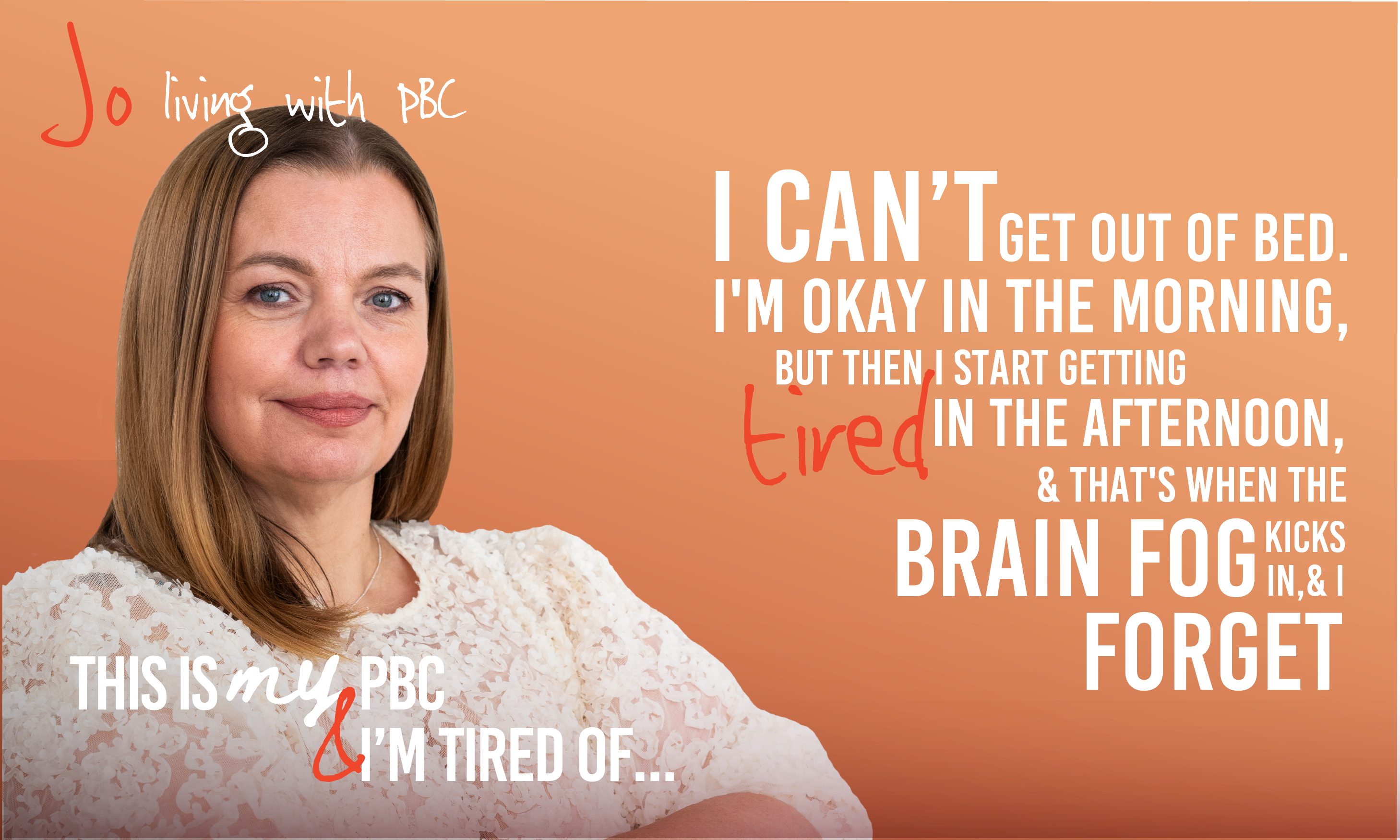
Meet Jo
For years, Jo has felt like fatigue has been an ‘unwelcome guest’, stealing her evenings and limiting her career. Now, she is putting her word on paper to make the invisible visible, reclaiming the agency that fatigue once stole. By writing this letter, she is finding the strength to advocate for her health, sharing her story to empower everyone living with PBC.
Learn more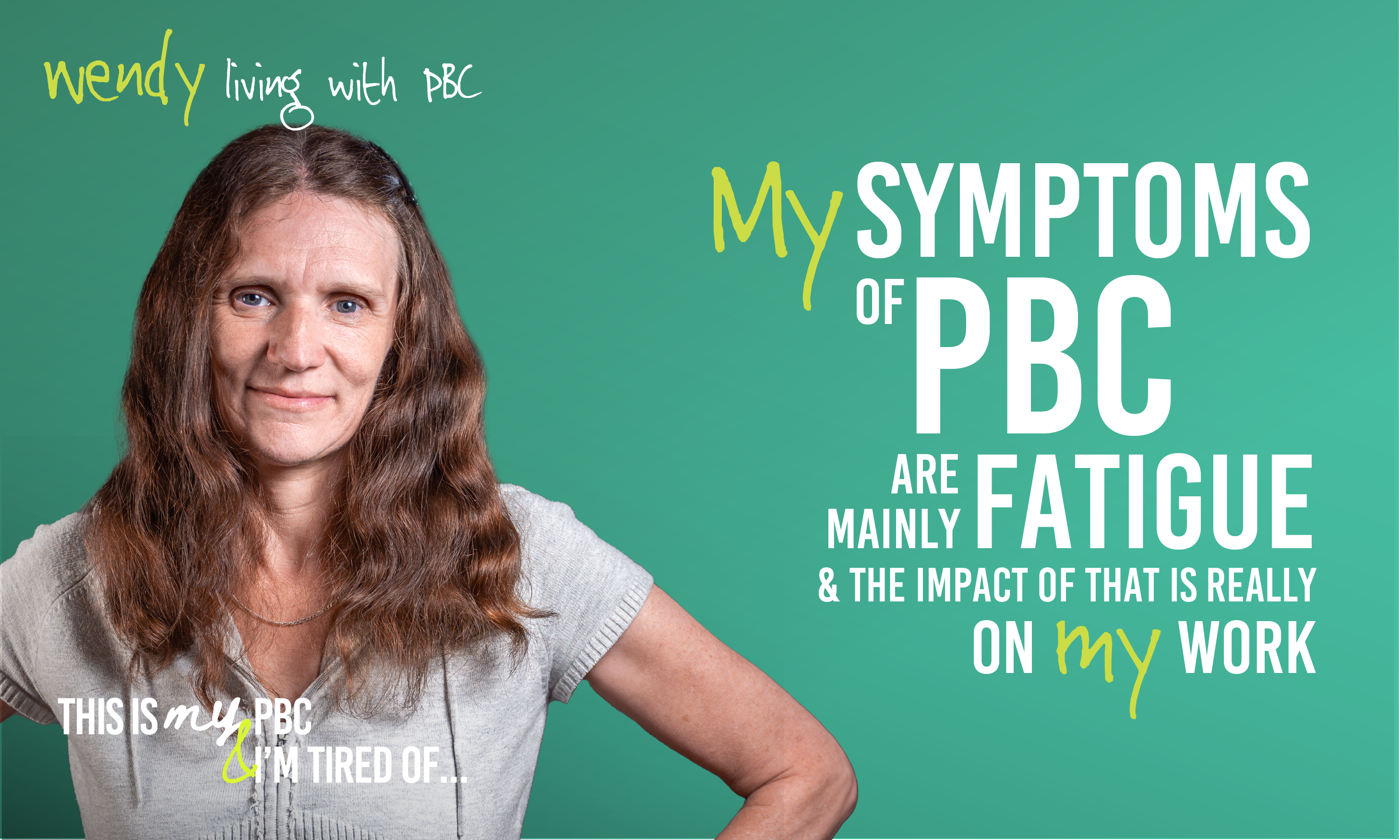
Meet Wendy
After 13 years of living with PBC, Wendy knows the reality: fatigue isn’t just tiredness, it is life changing. It has blurred her confidence and forced her to change her career. She is putting her words on paper to create a permanent record of the effort it takes for her to keep showing up every day. By sharing her story, she is demanding the awareness the community deserves, proving that while her fatigue may be invisible, she is not.
Learn moreUnderstanding PBC
This guide provides an overview to help understand and manage PBC. It covers 3 key areas: understanding what PBC is and who it affects, recognizing and coping with its symptoms, and learning about treatment options, lifestyle support, and the importance of ongoing monitoring.
Making Fatigue visible
More than tired getting the support you need
Top tips for taking control of your fatigue
Getting to know your PBC
What is PBC?
Why does PBC happen?
Who is affected by PBC?
What are the goals for managing PBC?
Reflection Session:
My unique experience of PBC
Living with symptoms
This address common symptoms of PBC, how they may change over time and how to reduce symptoms
Taking care of your PBC
This section covers the key aspects of managing PBC:
How is PBC treated?
Lifestyle and supportive care
Why regular monitoring matters?
What tests might you need?
Who is on your care team?
New era in PBC fatigue management
There is a critical need for improved recognition, routine measurement and open communication around fatigue in PBC, not just as a symptom, but as a core condition that significantly impacts quality of life.
Treatment must go beyond liver biochemistry and address both disease progression and the burden of symptoms, like fatigue – healthcare professionals should see and treat the whole person, not just the liver disease.
Where will This is My PBC take me?
You can paint a clearer picture of what it is like to live with PBC and with your doctor help make choices that are right for you, such as:
- Know how your symptoms make you feel. Keep an eye on your symptoms between your doctor’s appointments and keep a list of topics to discuss with your doctor the next time you see them.
- Know your alkaline phosphorate (ALP) numbers and what they mean for you. Ask your doctor questions about your ALP and bilirubin levels, and what they mean for your liver health.
Frequently asked questions
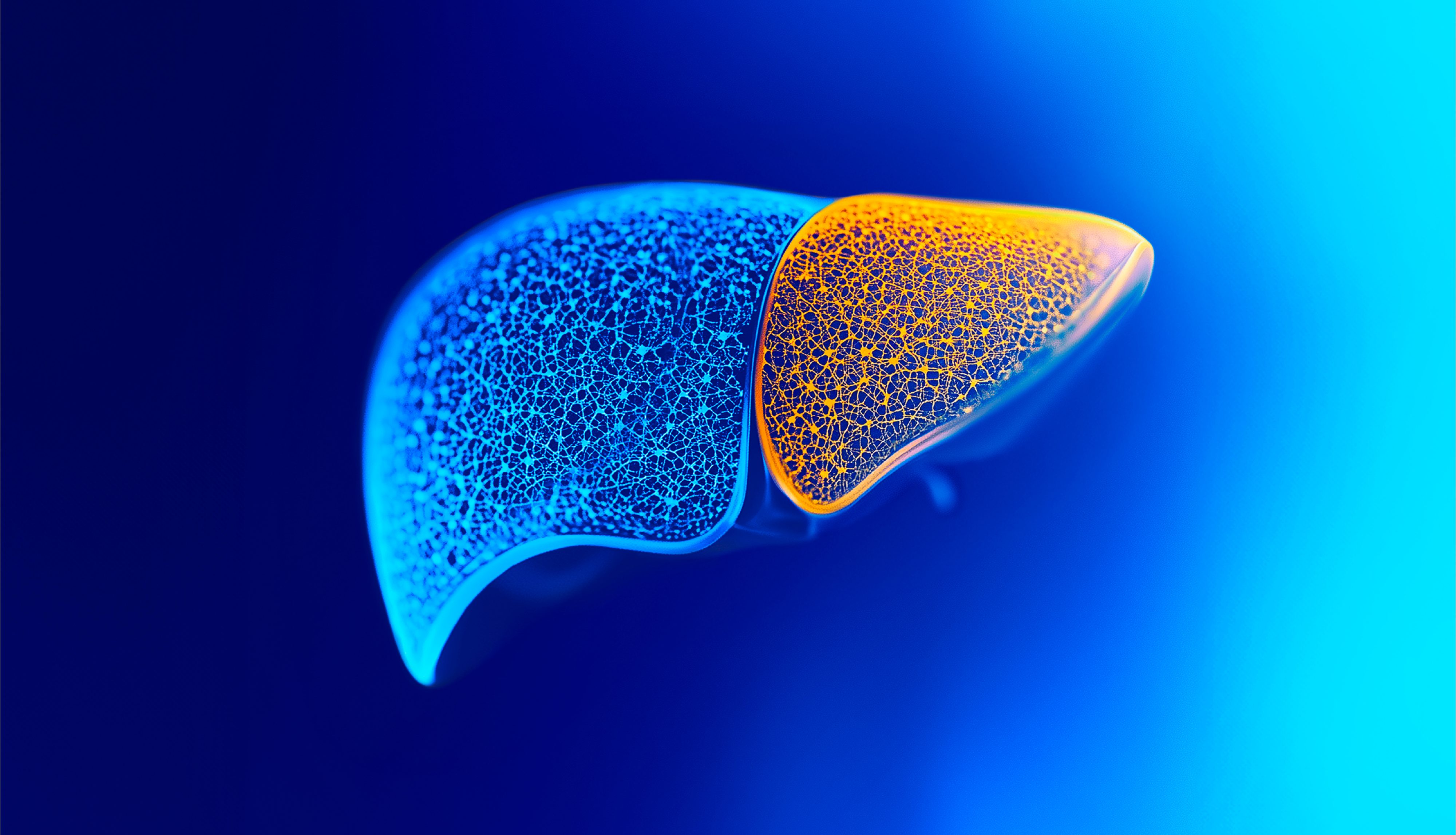
Primary Biliary Cholangitis (PBC) is a rare, progressive, autoimmune, cholestatic liver disease.In people with PBC, the body attacks and gradually destroys the liver’s small bile ducts. Bile and toxins may build-up (cholestasis) which can gradually scar the liver (fibrosis).
Women have a higher risk of developing PBC compared with men. In fact, 9 out of 10 people living with PBC are women, though reasons for this are largely unknown. The prevalence of PBC in men is increasing, and it is often diagnosed at a more advanced stage compared to women.
PBC symptoms can have a negative impact on a person’s quality of life. They include:
- Fatigue, affecting up to 80% of people living with PBC, with 20% reporting it as significant or life-altering– it’s not the same as being tired, fatigue is a measurable condition that exists independently of other symptoms.
- Itch (pruritus), affecting up to 75% of people living with PBC.
These symptoms can be debilitating and lead to sleep deprivation, depression, and suicidal ideation. Regardless if people with PBC experience symptoms, they are still at risk of disease progression and liver damage.
Fatigue is not the same as being tired. While tiredness can often be relieved by rest or sleep, fatigue is a chronic condition that isn’t improved by rest. Fatigue is persistent, overwhelming and not proportional to activity. It affects physical, emotional, and mental functioning, often interfering with daily life
Resources
How useful was this post?
Click on a star to rate it!
Related links
-
Albi España

-
Association Malattie Autoimmune Del Fegato (AMAF), Italy
-
British Liver Trust, UK
-
Casa Hunter
-
Deutsche Leberhilfe (German Liver Aid)
-
EpaC ETS, Italy
-
FAL, Norway
-
Leverforeningen, Denmark
-
Liver 4 Life, UK
-
Liver Foundation, Australia
-
PBC Canadian Society
-
PBC Foundation, UK
-
PBC Sverige, Sweden