
Balancing benefit and risk: Nisha Vora on the science of pharmacovigilance
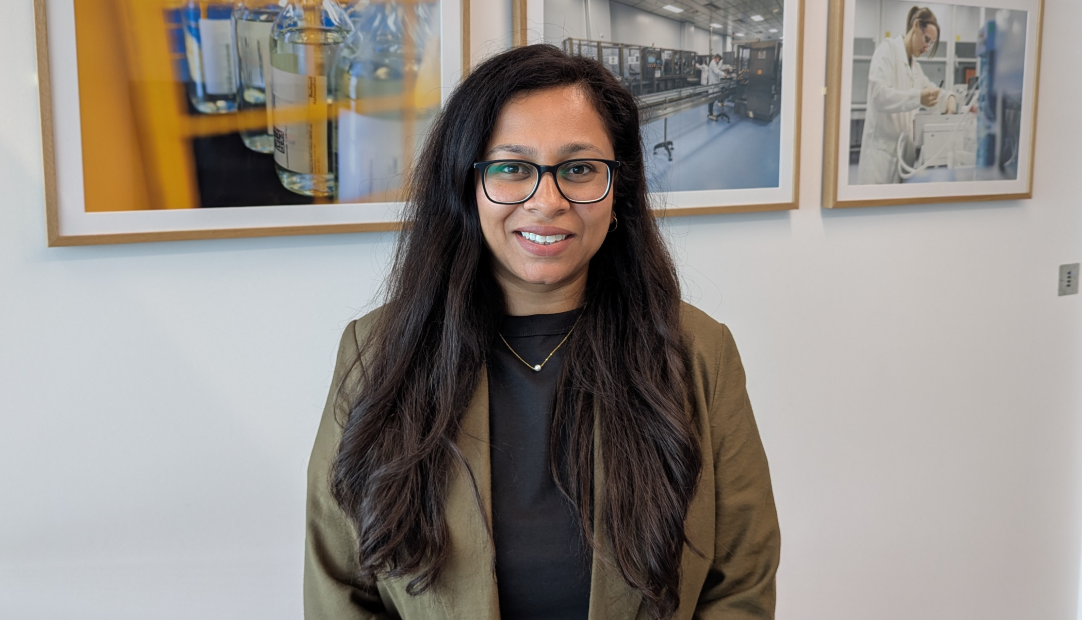
“My job is to be a guardian of patient safety.”
As Safety Science Director, she works across both early development and post-marketing, ensuring that risks are anticipated, analyzed, and managed so treatments can reach patients responsibly.
Her work currently includes a marketed medicine and another in early development, preparing for the first-in-human trial. “We have to define all the potential risks that we anticipate based on what’s been seen in non-clinical studies and other similar compounds,” she explains. “Once the first patient is treated, GPS is very closely involved in monitoring what happens—every reported adverse event, every side effect.”
That attention does not stop at trial data. “It’s analyzing and interpreting all safety data, whether it comes from clinical trials or the post-marketing side,” she says. “We work to identify any trends or signals that may impact the benefit–risk balance of the medicines. If we do identify something, then we decide what action is needed.”
Her role also extends to Ipsen’s Benefit Risk Decision Board. “It’s the highest level of safety governance,” she says. “Teams bring their data, and the board makes the ultimate decisions. For me, it’s a unique opportunity to understand the important safety decisions being taken for products across the Ipsen portfolio.”
One moment that stands out came during a recent European regulatory submission for an extension of indication. “Part of the strategy was to show that the safety profile was consistent with what was already known for the product,” she recalls. “It was a long journey, but I learned so much along the way, and it was so rewarding when the final decision was approval.”
For Nisha, that is the purpose of pharmacovigilance. “To understand, minimize, and communicate the risks or harmful reactions associated with a medicine, allowing an assessment on the benefit versus the risk to be made,” she says. “What we do is crucial to ensure patients can access safe treatments.”
How useful was this post?
Click on a star to rate it!


Characterizing the patient experience: The role of patient‑reported outcomes

A bridge to the field: how real-world data informs rare disease care
Rethinking discovery: how powerful screening tools are redefining the search for new medicines