11th February marks International Day of Women and Girls in Science. To celebrate the occasion, we spoke to Martine Zimmermann, Jill Buck, Alison Mason, Florence Meyer-Losic, and Christelle Huguet to hear the advice they would share with their younger selves as they embarked on their STEM careers.
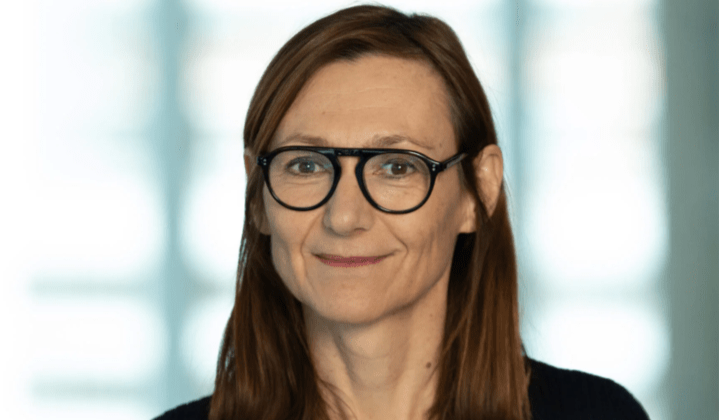
Martine’s scientific journey was shaped by a crucial “Ah-ha!” moment during an internship where she gained access to technology enabling her to visualize the inner workings of cells. This profound ability to “see the science” became the focus of her work in molecular biology. It emphasized the importance of precision in understanding how medicines impact and target specific cellular structures, forming a strong connection between the source of her work and its impactful outcomes.
Martine’s leadership triumphs are rooted in her commitment to nurturing and empowering others. Martine firmly believes in the principle that “the more you invest in people, the greater the results”. Interestingly, she draws connections between stepping into a leadership role and entering motherhood: “Taking the time to explain things well, whether to my team or my children, leads to more successful outcomes.”
In essence, her fulfillment lies in the development of people, with the transition into leadership as the central focus, and motherhood serving as an additional dimension to her overall journey: “Witnessing the potential in individuals, investing in their growth, and seeing them flourish is exceptionally satisfying. It is developing people that makes me happy.”
Despite facing bias across her career, Martine emphasizes: “Biases exist everywhere in society, from your personal life to the workplace, but the key lies in recognizing and navigating through them – nothing worthwhile falls from the sky.” As such, her mantra is resilience and urging others to pursue goals without hesitation. Her advice for starting a career in STEM is: “If Plan A fails, explore other letters in the alphabet.”
Martine’s advice to her younger self:
“Pursue aspirations wholeheartedly and do not give up at the first hurdle. The environment will adjust. You are the master of your career – one must shape it at their own pace.”
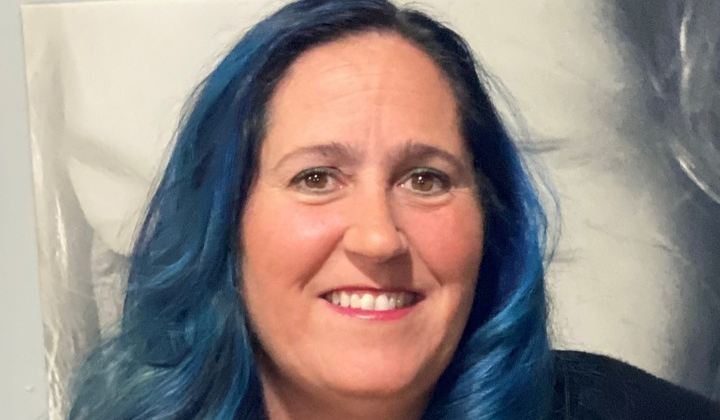
Jill Buck, who drives Ipsen’s clinical strategy and operations, speaks to the transformative influence of being “authentically you” and the importance of embracing your professional journey.
Despite not initially pursuing a career in STEM, Jill believes this has benefitted her career journey, constantly gaining fresh perspectives and an “outside way of doing things.” From this, Jill recognized the crucial role that networking and connecting people has played, affirming one of her key takeaways: “If you can be a resource to people, you absolutely should. The more we can do to reach out and help connect people makes everything better for everyone.”
On navigating challenges, Jill emphasizes that there is not always a “right” answer, advocating for overcoming difficulties through a solutions-based mindset and shared learnings. With this in mind, she adds: “While you might not have the power to shape your entire company, you can certainly make a meaningful impact in smaller, more manageable realms.”
Addressing the common experience of the “inner voice” and instead “embracing our uniqueness,” Jill recommends normalizing these feelings: “In moments of doubt, recognize that those around you may share similar uncertainties. Take the opportunity to reflect on the journey that brought you to this point and move past it.” Our uniqueness is what we, as individuals, bring to the table: “Being authentic and feeling secure in the value that you bring to the table is key to thriving throughout your journey. In every moment I have not been authentically me, I have looked back and wished I had done something differently.”
Jill’s advice to her younger self:
“View your career path as a rock climbing wall; it’s okay not to know the next step and you might have to go sideways or even backwards – embrace the uncertainty and trust in your ability to figure it out.”

Alison Mason, who manages Ipsen’s upstream process development team, on the significance of seeking new opportunities and embracing a diverse range of perspectives for personal and professional growth.
Alison’s science journey started with an industrial placement year, which she considers the “best decision” she made during her early career. Recognizing that self-belief and seizing new opportunities have been crucial in her personal and professional journey, Alison imparts a key insight: “Be bold, step out of your comfort zone, and embrace moments of discomfort for career opportunities. Progression is all about finding the delicate balance between change and enjoyment.”
Regardless of career stage, she emphasizes the importance of pursuing new opportunities and gaining fresh perspective, stating that you’re “never too senior to benefit from the unique perspectives that can be obtained from actively seeking internal and external mentorship.” While advocating for “taking ownership of your own career,” she recommends proactively engaging with managers to enhance responsibilities and accumulate knowledge – an approach she herself applies as a leader.
On progressing into leadership, Alison explains that it was through her early mentors – or “science mum” – that she learned the value of varied leadership styles, emphasizing that diversity fosters innovation: “If we were all the same, we’d think the same and we wouldn’t benefit from that difference in perspective. By having unique styles, we can challenge each other to ultimately reach the right solutions.”
Sharing her career specialization strategy of “doing what I love doing,” Alison provides valuable advice on choosing a focus: “Be proactive, confident, and follow your passion. Taking that initial step is challenging but remember that when you’re nervous, it indicates you care. Don’t hesitate to seek support in pursuing what you want.”
Alison’s advice to her younger self:
“Take yourself out of your comfort zone as much as possible – this is where you will learn the most.”
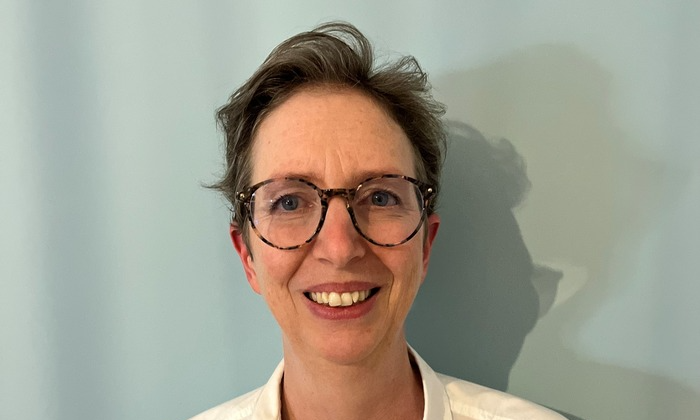
Florence Meyer-Losic, Vice President and Head of Translational Science leading a team of scientists dedicated to supporting the transition of ideas to clinical success in oncology, rare disease & neuroscience research, discusses her key career learnings, from championing self-belief to recognizing strength within fragility.
Originally training as a vet, Florence was attracted to a career in science because of the dynamic nature of the work. Put simply, she loves “the gymnastics you have to do in your brain to understand what is happening, giving you a real opportunity to fine-tune your skills, apply your experience, and exercise your resilience.” Her drive has always been closely linked to her desire to continue learning.
Considering how she has faced challenges over the years, Florence advises that we must all embrace our support networks, as opposed to isolating ourselves. She emphasizes that “fragility is different to weakness. By expressing our concerns, we can unite our teams, support each other, and combine our strengths.” As such, she advocates for opening up about your fragilities, whilst maintaining your belief in yourself, your colleagues, and your work. By doing so, you can find alternative routes to achieve your goal and maximize the impact of collaborative efforts.
Florence expands on the importance of believing in yourself throughout the journey: “While you will always have doubts along the way, you must trust in your abilities.” She further suggests that “we should not be afraid to say what we did well in times of success, even if it feels uncomfortable and takes a conscious effort.” This is something Florence feels she is still striving to improve, recognizing how her career is “always evolving”.
Florence’s advice to her younger self:
“Believing in ourselves is key to being able to maximize our skills, but we must be open to our fragilities – fragility is not weakness.”
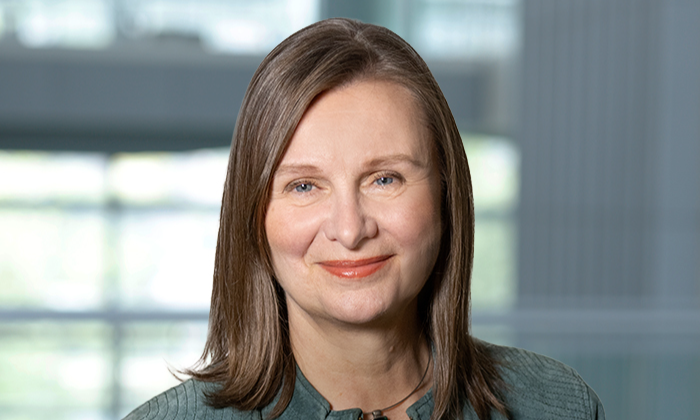
Christelle Huguet, Executive Vice President who heads up and inspires the R&D team at Ipsen, shares her insights about navigating a career in science, including the power of mentorship, confidence building, and ultimately keeping focused on what truly matters to you.
Taking inspiration from many sources including her mother’s passion for learning new skills, Christelle is grateful to have learned a lot from role models in both her personal and professional life, sharing one overarching learning: “If you want it, you can do it. You just have to keep looking forward and moving forward.”
Christelle recognizes the positive impact she has gained from the value of mentorship: “A mentor is not about your daily job. It is truly about how you evolve in your career and at different stages in life. It is important for everyone.” She has kept in touch with her own mentors from throughout her career journey, finding it an invaluable opportunity to bounce ideas, whilst also mentoring colleagues within and outside of Ipsen and following their development over the years.
In addition, building confidence is a key part of any career journey, and something that Christelle believes is never finished. “We must acknowledge the small wins, at every level of our careers. Women are often not good at this – judging themselves against the big goals and not really paying attention to positive feedback. While we should remember that growth is not linear, we must also recognize the steps we take forward.”
Christelle explains that it is crucial to learn how to effectively navigate transitions. While it is important to “try different things to open your horizons, you must focus on what you enjoy.” As we face challenges, celebrate successes, and continue to grow, “we must take a step back and think about our purpose. If we remain focused on the patients, that will continue to drive us.”
Christelle’s advice to her younger self:
“Not everything has to be perfect. Look at the bigger picture – reflect on your passion, your joy, and your curiosity in all areas of work and life.”
Hear what Ipsen CEO David Loew has to say about our solid full-year results and a new era of dynamic growth.
FY 2023 results announcement
Ipsen’s FY 2023 results announcement took place on 8 February 2024 at 7am CET/1am EST.
Key highlights
08 February 2024
08 February 2024

 LinkedIn
 Facebook

FY 2023 results presentation & highlights
Discover the key highlights and results presentation, showcasing Ipsen’s performance and dedication to delivering value to our stakeholders.

Investor and analyst conference call
An investor and analyst conference call, with presentations and an interactive Q&A session, took place after the FY 2023 results announcement.
Investor and analyst conference call speakers



About Ipsen
We are a global biopharmaceutical company with a focus on bringing transformative medicines to patients in three therapeutic areas: Oncology, Rare Disease and Neuroscience.
Our pipeline is fueled by external innovation and supported by nearly 100 years of development experience and global hubs in the U.S., France and the U.K. Our teams in more than 40 countries and our partnerships around the world enable us to bring medicines to patients in more than 100 countries.
Ipsen is listed in Paris (Euronext: IPN) and in the U.S. through a Sponsored Level I American Depositary Receipt program (ADR: IPSEY).
IPSEN IN BRIEF
Our vision is to be a leading global mid-sized biopharmaceutical company with a focus on transformative medicines in Oncology, Rare Disease and Neuroscience.
Discover Ipsen in two pages; our products and key figures, our objectives and our strategy.

If you are experiencing difficulties registering for the investor and analyst conference call, please contact: nicolas.bogler@ipsen.com
Nora and her husband, Hector, met 39 years ago, got married shortly after, and have been inseparable ever since. In 2021, Hector was diagnosed with metastatic pancreatic cancer, which threw their entire family into navigating a very difficult diagnosis. Nora has taken on the role of Hector’s advocate and caregiver.
Metastatic pancreatic cancer is one of the hardest to detect and most difficult cancer types to treat when compared to all solid tumor types.1 Emotionally, metastatic pancreatic cancer can affect daily life, negatively impacting a patient’s psychological and emotional well-being just as quickly as their physical health. Since the diagnosis is serious with an average survival of less than two years2 , people diagnosed and their loved ones experience stress, uncertainty and a mix of other emotions.
For Hector, the first sign he had that something wasn’t quite right was when he started having problems with his stomach. A visit to the gastrointestinal doctor revealed spots on his pancreas, which he was told were not a big deal. But, after about three more months and numerous visits to the hospital, one day, Nora noticed that Hector’s skin had a yellow hue. The couple rushed to the hospital, where Hector was diagnosed with stage IV metastatic pancreatic cancer. Speaking to the severity of the diagnosis, Nora said, “we both knew what it meant.” It was devastating news for their family, especially after being told nothing was wrong.
But, the couple decided they would not give up. “We’re going to fight it. We’re going to do everything we can,” explains Nora. She made it her mission to become Hector’s best advocate by joining him at all of his doctor’s appointments and keeping a notebook of everything to remember – from names of doctors to ideas about how she could support Hector with nutrition.
Nora reminds people who are caring for a loved one that it’s important to make time for yourself and maintain your own physical and mental health as a caregiver. She notes that by taking care of yourself, you’re enabling yourself to best support your loved one. For her, she finds respite when listening to music and loves going for hikes to clear her head.
Although Hector and his family have a very difficult diagnosis of metastatic pancreatic cancer, Nora
believes in the power of positivity and offers advice to others going through a similar situation: “Don’t give up. There’s always hope.”
Pancreatic cancer facts
- Pancreatic ductal adenocarcinoma (PDAC) is the most common type of cancer that forms in the pancreas.2,3
- More than 500,000 people are diagnosed with PDAC globally each year.4
- There are no specific symptoms in the early stages, leading to PDAC often being detected late and after the disease has spread to other parts of the body (metastatic or stage IV).5
- Weight loss, abdominal pain and jaundice are the most common symptoms at later stages of disease.6
1 Orth, M., Metzger, P., Gerum, S. et al. Pancreatic ductal adenocarcinoma: biological hallmarks, current status, and future perspectives of combined modality treatment approaches. Radiat Oncol 14, 141 (2019). https://doi.org/10.1186/s13014-019-1345-6
2 https://www.cancer.net/cancer-types/pancreatic-cancer/statistics. Accessed: January 2024.
3 https://www.cancer.org/cancer/types/pancreatic-cancer/about/what-is-pancreatic-cancer.html. Accessed January 2024.
4 GLOBOCAN 2020 Cancer Today. Available: https://gco.iarc.fr/today/online-analysis-table?v=2020&mode=cancer&mode_population=continents&population=900&populations=900&key=asr&sex=0&cancer=39&type=0&statistic=5&prevalence=0&population_group=0&ages_group%5B%5D=0&ages_group%5B%5D=17&group_cancer=1&include_nmsc=0&include_nmsc_other=1. Accessed: January 2024.
5 Sarantis et al. Pancreatic ductal adenocarcinoma: Treatment hurdles, tumor microenvironment and immunotherapy. World J Gastrointest Oncol. 2020 Feb 15; 12(2): 173–181. DOI: 10.4251/wjgo.v12.i2.173
6 www.cancer.org/cancer/types/pancreatic-cancer/detection-diagnosis-staging/signs-and-symptoms
In 2023 Ipsen launched its third global patient organization engagement survey, featuring the perspectives of 85 patient organizations (POs) globally. These findings will be used to help Ipsen deliver on what matters most to patients and caregivers. For the third year in a row, our ratings have increased, and we’re proud of this year’s rating of 8.7 out of 10 for overall satisfaction with patient engagement.
Survey background
The 2023 survey included 85 patient organizations across a diverse range of set-ups, from global, national, regional to umbrella organizations, and had wide geographic coverage. It spanned each of Ipsen’s three focus therapy areas of oncology, rare disease and neuroscience.
What is going well with patient engagement?
Feedback shows three main areas where Ipsen is performing well according to the needs of the patient community, i.e.
- Acts with honesty and integrity
- Uses the right language to communicate
- Patient engagement skills that employees display are excellent
Where can we improve?
These were the three main areas recommended to address:
- Ensure co-creation happens routinely
- Offer appropriate compensation for services
- Make the contractual process clear and simple
Work to address these is already under way, for example via a collaborative project between Legal, Patient Affairs and expert patient advisors to simplify the process of how Ipsen contracts with patients.
How can Ipsen better support the needs of patients in 2024?
There were four key areas identified by patients where they recommend Ipsen can do more to support their needs in the coming year, namely:
- Support initiatives to improve the patient experience and outcomes
- Growth, sustainability and PO support
- Increase inclusion and co-creation opportunities
- Support communication, awareness and education efforts
What’s next?
“All the data from this years’ survey is being used to guide our ‘Patient 3.0’ strategic roadmap, so that we can evolve our patient engagement skills and capabilities and take our ambitions to work with patients, for patients, to the next level”, explained Pascale Cavillon, Global Patient Affairs Director, Oncology, who has led the survey since inception in 2020.
Thank you to everyone who supported the project and to the patient organizations that responded.
At the J.P. Morgan Healthcare Conference in San Francisco from January 8 to 11, 2024, Ipsen’s management team leaders will discuss our transformation story, next phase of growth and external innovation ambitions.
Keeping up the growth momentum
Over the past three years, we have completely transformed our business and pipeline, delivering on the strategic roadmap established at the end of 2020. We are now ready for the next phase of our transformation.
In full-year 2022, Ipsen passed €3 billion in total sales. Our portfolio includes four medicines – Dysport, Cabometyx, Decapeptyl as well as Somatuline – each set deliver sales of at least €500m. In the longer term, we anticipate seven medicines in our portfolio that could reach this potential, positioning us well to sustain attractive growth.
Now, we are gearing for further growth in the period 2023-2027. In December 2023, Ipsen provided a midterm outlook at its Capital Markets Day – an average total-sales growth of at least 7% per year (at constant exchange rates) and a core operating margin in 2027 of at least 32% of total sales. This outlook excludes the impact of any late-stage external-innovation opportunities.
Presenting a strong investment case
CEO David Loew and CFO Aymeric Le Chatelier are attending the conference, alongside the Investor Relations and Business Development teams. On January 9, David Loew will deliver a presentation on Ipsen’s strategic progress, the mid-term outlook and growth opportunities. His talk will be followed by a Q&A session. We are also organizing a series of meetings to discuss our compelling investment case with investors and analysts. If you are an investor would like to meet our executives and Investor Relations team, we encourage you to contact JP Morgan to arrange a meeting.
Partnering for life-changing impact
At Ipsen, we know that great partnerships create great possibilities and bring therapeutic solutions to patients faster. In recent years, we acquired two global biotechs – Epizyme and Albireo – and signed deals that fuelled our pipeline with a further 20+ programs. Looking ahead, we are anticipating some exciting R&D milestones in the near-term. We are also accelerating our external innovation efforts to continue to boost our pipeline across all phases of development. Based on strong levels of free cash flow and profitability, our cumulative balance-sheet firepower for deal opportunities could reach up to €5bn by 2027.
Chief Business Officer Philippe Lopes-Fernandes, Head of R&D Christelle Huguet and the partnering team will attend the J.P. Morgan Healthcare Conference. They will be available in San Francisco to meet with potential partners working in Ipsen’s three therapeutic areas – Oncology, Rare Disease and Neuroscience – and discuss our track record of optimizing the impact of our partners’ programs.
Philippe will also participate to the panel “Removing Barriers: Healthcare Access and Equity for Al” at the Biotech Showcase on January 9.
We invite interested parties to contact us and arrange a meeting beforehand.
For more information on Ipsen, please visit our Investors and Partnering pages.
At Ipsen, improving patients’ lives drives us. We work together with patients, for patients. However, we know that understanding how to be more patient centric can be challenging, especially if you don’t work with patients in your day-to-day role. To help bridge that gap the Ipsen Global Patient Affairs team collaborated with colleagues across the organization, senior patient organization leaders and agency partners to develop its first patient centricity week in June 2023: Care 2 Know More.
What is Care 2Know More?
Care 2 Know More is an opportunity for all at Ipsen to learn how to be more patient-centric and have a positive impact through partnerships, projects, and ways of working. During the week, colleagues were able to find out what it means to be patient centric and how to bring it into their work, regardless of whether they work directly with patients.
To kick off the week, David Loew, Ipsen’s CEO, shared his own reflections on what inspires him to be patient centric and how listening to patients can improve the work we all do; from improving the design of a clinical study to supporting those who do work directly with patients and physicians to better deliver outcomes. Additionally, other senior leaders in the organization were Care 2 Know More ambassadors and shared their thoughts through a series of videos on a dedicated digital platform.
Listening to patients
During the week colleagues also had the chance to hear from three patient organizations – SAFE Stroke Alliance for Europe, the PBC Foundation and the International Kidney Cancer Coalition (IKCC) in a virtual roundtable discussion, hosted by Emma Sutcliffe, VP Global Patient Affairs, broadcast across the organization. They shared their views on Ipsen’s patient centricity commitment and how we can help bring the patient experience out of the shadows and into the spotlight in everything we do. Nearly 400 colleagues joined the virtual roundtable viewing, with many more joining in person group viewings and watching it later via catch-up.
‘Click’ to Care 2 Know More
Underpinning the belief that patient centricity is everyone’s responsibility at Ipsen, we asked colleagues to show their support of this by clicking on a square as part of our virtual Click to Care 2 Know More activity. During the week over 700 colleagues from 34 countries clicked to care and helped bring patients out of the shadows.
Tools and resources
As part of the week, colleagues were also invited to get involved in global and local activities as well as upskill and learn more about patient centricity on the dedicated digital Care 2 Know More platform. This contained lots of great content such as videos of the Global Patient Affairs Directors on what patient centricity means to them, and some examples of it in action. There was also the opportunity to get trained in patient centricity and find useful resources and information. Additionally, colleagues could find out who their local Ipsen patient centricity champions from our global network are and discover how to get more involved. In total 45 events were organized by different teams throughout the week, with 12 patient organization representatives taking part in activities across the globe.
Not a one-off: Ongoing commitment
Ipsen’s focus on patient centricity does not end with Care 2 Know More week, it served as a reminder to always think about how we can bring the patient perspective into our work and call it out with a finger click if we don’t see it happening. The continuing focus is to keep patients out of the shadows and firmly in the spotlight.
It was fantastic to see so many colleagues from all over the world get involved and collaborate with patient organizations on Care 2 Know More: We will be back in 2024!
Discover the highlights here:
“The important thing with PBC is to take a holistic view of it, and think ‘What are the problems we are trying to solve? The first is the risk of progression to cirrhosis, and the other is symptoms and quality of life.” – Professor David Jones.
Primary Biliary Cholangitis, or PBC, is a rare, autoimmune, cholestatic liver disease.1 Of those living with PBC, nine out of 10 people are women, though reasons for this are largely unknown.2 Some evidence suggests there may be a genetic and environmental cause, but more research is needed.3,4 Despite stigma often faced by people living with PBC, we do know that the disease is not caused by alcohol consumption.3,4
Those living with PBC can face debilitating symptoms with a significant impact on daily life.5 Fatigue is the most frequent symptom, affecting up to 77% of patients.6 Almost half (45%) of people with PBC live with clinically significant fatigue, of which nine of out ten people have a poor quality of life and show symptoms of social impairment or dysfunction.7 Pruritus (severe itch) is another common symptom and can affect up to 70% of patients at some point during their experience with PBC.8,9 Both symptoms can cause such a negative impact on a person’s quality of life and can lead to depression, sleep deprivation, and suicidal ideation.10
“In terms of symptoms, the first battle is to get clinicians to actually ask about them. So about half of all patients are never actually asked about their symptoms, and that’s an obvious problem.” – Professor David Jones.
Ipsen’s Chief Medical Officer, Sandra Silvestri, had the opportunity to sit down with Professor of Liver Immunology, David Jones, at this year’s The Liver Meeting, an annual congress run by the American Association for the Study of Liver Diseases (AASLD). Here, Professor Jones shares the importance of patient reported outcomes being considered alongside biomarkers of liver health to help address the symptoms which are having a significantly negative impact on a person’s quality of life and ultimately, help improve the care of people living with PBC.
Listen to the full interview below.

References
- Younossi ZM, et al. 2019. Diagnosis and Management of Primary Biliary Cholangitis. Am J Gastroenterol. 114(1):48–63.
- Galoosian A, et al. 2020. Clinical updates in primary biliary cholangitis: trends, epidemiology, diagnostics, and new therapeutic approaches. J Clin Transl Hepatol. 8(1), pp. 49-60.
- Primary Biliary Cholangitis. British Liver Trust. https://britishlivertrust. org.uk/information-and-support/liver-conditions/primary-biliary- cholangitis/. Accessed October 2023.
- Joshita S, et al. 2018. Genetics and epigenetics in the pathogenesis of primary biliary cholangitis. Clin J Gastroenterol. 11, 11–18.
- Selmi C, et al. 2007. Quality of life and everyday activities in patients with primary biliary cirrhosis. Hepatology. 46(6), pp.1836-1843.
- Jung HE, et al. Prognostic indicators in primary biliary cirrhosis: significance of revised IAHG (International Autoimmune Hepatitis Group) score. Clin Mol Hepatol. 2012;18(4):375-382.
- Mells GF, et al. 2013. Impact of Primary Biliary Cholangitis on Perceived Quaity of Life: The UK-PBC National Study. Hepatology. 58:273-283.
- Milovanovic T, et al. Quality of Life in Patients with Primary Biliary Cholangitis: A Single-Center Experience in Serbia. Dig Dis. 2020;38:515-521.
- Oeda S, et al. Prevalence of pruritus in patients with chronic liver disease: A multicenter study. Hepatol Res. 2018;48:E252-E262.
- Gungabissoon U, et al. 2022. Disease burden of primary biliary cholangitis and associated pruritus based on a cross-sectional US claims analysis. BMJ Open Gastroenterol. 9(1), p.e000857.
Starting now and throughout 2024, Ipsen is sponsoring five talented, elite athletes on their journeys toward the 2024 Paralympic Games.

TRACK & FIELD
Valentin Bertrand
Bronze medalist in Long Jump at 2023 World Championships.
A believer in the Ubuntu philosophical concept that an authentic individual human being shares a bond that connects all humanity.

ROWING
Margot Boulet
Bronze medalist at Tokyo 2020 Paralympic Games.
Former member of GIGN, the elite police tactical unit of the National Gendarmerie of France.

SPORT SHOOTING
Gaëlle Edon
Silver medalist in Women’s 10m Air Pistol at 2023 WSPS World Cup.
Created La Pelle Tenace (“The Tenacious Blade”), an association that helps open up the sport of para-rowing to those with disabilities.

TRACK & FIELD
Angélina Lanza
Bronze medalist in Long Jump in 2017 World Championships and 5-time European Championships medalist.
Has a Master’s degree in foreign languages: ” Languages are a door to the world for me”.
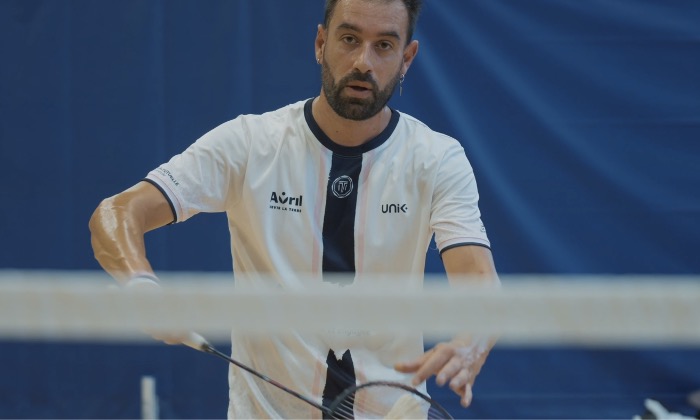
BADMINTON
Mathieu Thomas
17-time French national champion, ranked 6th globally in singles, 1st in doubles.
Motivational speaker who travels the world to share his personal story of triumph.
Jennifer Schranz (Ipsen’s Global Head of Rare Diseases) attended The Liver Meeting from November 10-14, sharing key insights from her time onsite and explaining why scientific congresses are vital in helping advance innovation for patients.
With an exciting number of sessions and abstracts focused on cholestatic liver diseases, Jennifer tells us why rare cholestatic liver diseases are in focus.
The Liver Meeting is an annual congress run by the American Association for the Study of Liver Diseases (AASLD) in which experts from around the world gather to share and discuss the latest research, insights, and advancements in liver diseases. This year, the five-day meeting was held in Boston, Massachusetts.