
When science advances, understanding must keep pace
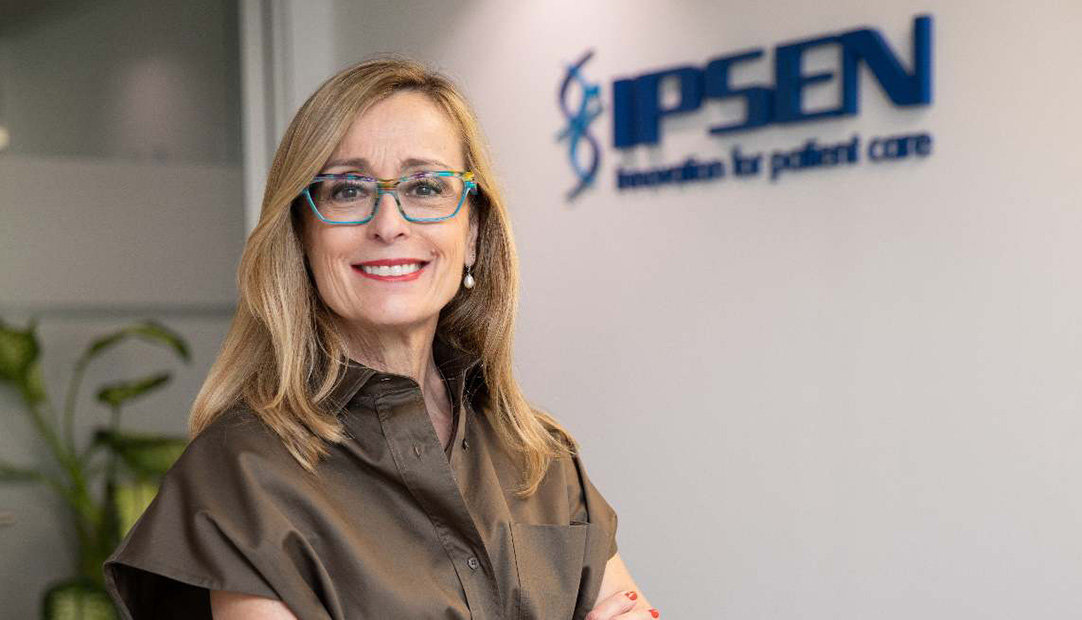
Aurora Berra, Vice President Global Patient Officer
We are living in an era of extraordinary scientific progress. We can target diseases in ways that were unimaginable a generation ago, develop increasingly sophisticated medicines and explore entirely new approaches to treatment.
Yet there is a paradox at the heart of modern healthcare: as science becomes more advanced, understanding it can become more difficult. That is why health literacy matters. A breakthrough can only reach its full potential when the people it is intended to help can understand what it could mean for their lives.
At Ipsen, much of our focus is in areas where significant unmet need remains and patients are often waiting for meaningful advances. We brought forward the first-ever approved treatment for fibrodysplasia ossificans progressiva (FOP), helped expand options for people living with primary biliary cholangitis (PBC) and are advancing targeted treatment approaches to children with pediatric low-grade glioma (pLGG).
For the people and families affected by these conditions, scientific progress is not an abstract concept. It can bring new possibilities where options have been limited. With every advance comes a responsibility, not only to make the science a reality, but to bring patients and communities on the journey with us.
Effective communication is often one of the hardest parts of that journey to get right. Health literacy is varied and nuanced. It is often framed around a patient’s ability to understand complex information. But I believe we need to ask a different question: have we communicated the science clearly enough?
That shift matters. It places the responsibility on those of us creating and sharing health information. Our role is not simply to provide facts, but to make them genuinely useful, so people can ask the questions that matter to them and make informed decisions about their care. That means challenging ourselves at every step, thinking creatively and being open about what we know, as well as where uncertainty remains.
Clarity must start at the outset, not once the science is complete and the materials are written. Some of our most valuable teachers are patients and caregivers themselves. Our Patient Expert Review Panels help ensure materials reflect the realities of living with a condition, challenging assumptions and uncovering barriers we might otherwise miss.
Our Plain Language Review Panel brings another perspective, helping us identify language or concepts that may not be as accessible as intended. We aim to apply these learnings across everything we share, from visual explainers and plain-language summaries to open access to our published research.¹ Each is part of the same ambition: to remove barriers between scientific progress and the people it is intended to serve.
Science will continue to move at pace, particularly in the areas we are pursuing at Ipsen. How we communicate must evolve alongside it.
Because innovation is not only about discovering what is possible. It is about ensuring people can make sense of what is possible for them. For me, that is what responsible innovation looks like.
References
- Ipsen. Clinical data transparency. Our pledge: summaries in plain language for all journal publications. https://www.ipsen.com/stories/general/our-pledge-summaries-in-plain-language-for-all-journal-publications/. Accessed 14 August 2026.
How useful was this post?
Click on a star to rate it!


Characterizing the patient experience: The role of patient‑reported outcomes

A bridge to the field: how real-world data informs rare disease care

Rethinking discovery: how powerful screening tools are redefining the search for new medicines