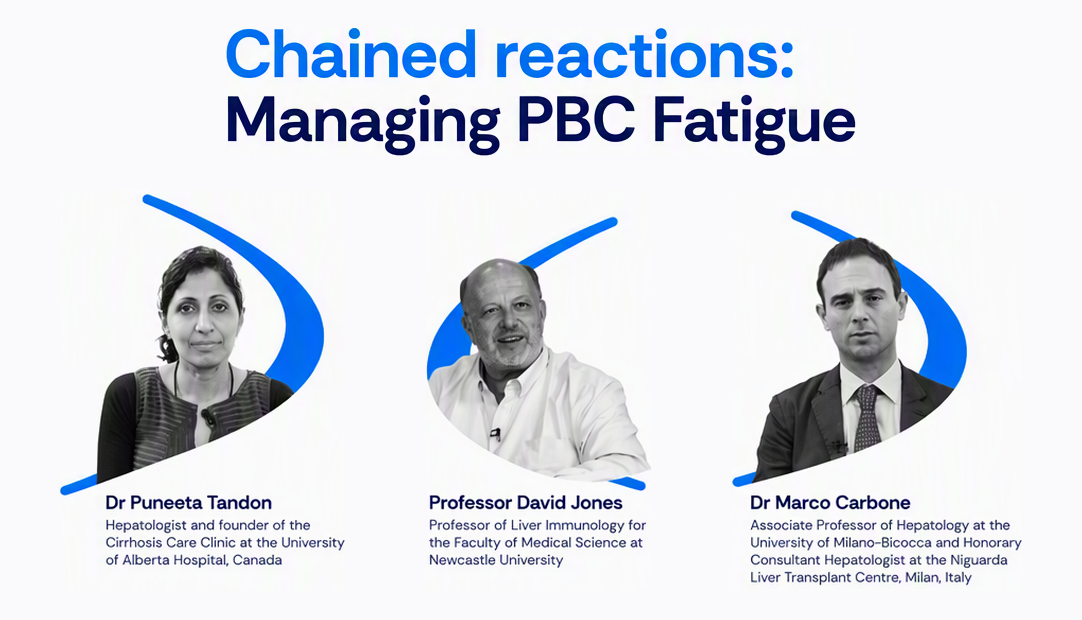
Ipsen at The Liver Meeting 2026: Is Good Still Good Enough?
- Through clinical research, expert collaboration and patient-focused initiatives, Ipsen is working to improve outcomes and help raise standards of care for people living with rare liver diseases.
- New data support a vital shift in patient care: moving beyond simply managing blood levels of the disease biomarker alkaline phosphatase (ALP) within an acceptable range, to aiming for normalization of ALP levels as the standard for improved long-term health in Primary Biliary Cholangitis (PBC).1
- Beyond traditional pediatric care, growing awareness that rare genetic conditions such as Progressive Familial Intrahepatic Cholestasis (PFIC) and Alagille Syndrome (ALGS) can present in adolescents and adults is reshaping approaches to diagnosis and management.2,3
Rare liver diseases are often complex, progressive and frequently under-recognized, creating significant challenges for people affected by them. At Ipsen, we are focused on changing that narrative. By combining scientific leadership with a deep understanding of the needs of those living with these conditions, we are working to reshape the future of hepatology and help raise standards of care worldwide.
A New Ambition for PBC Management
We are currently witnessing a major shift in how we approach the treatment of PBC. For years, clinical guidelines have focused on lowering levels of ALP (an enzyme that serves as a marker of disease activity in PBC) as a measure of how well treatment is working.4,5 Today, that ambition is evolving.
There is growing consensus among experts that aiming for normalization of ALP levels, rather than simply lowering them, is not only achievable but should be the standard target for preserving long-term liver health.1,6 However, managing these biochemical aspects is only half the picture. We are committed to supporting a more holistic approach, where clinicians treat not just the ALP levels, but also the burdensome symptoms like fatigue and pruritus that can profoundly affect a person’s quality of life.7,8
Challenging Perception of PFIC and ALGS
One of the most persistent barriers in rare disease management is the assumption that genetic conditions, such as PFIC and ALGS, only affect children.
This perception often leaves adolescents and adults who have unexplained cholestasis (abnormal flow of bile from the liver) without a clear diagnosis. Expanding awareness, using genetic testing where appropriate, and developing better identification tools could help more people reach an accurate diagnosis and appropriate specialist care.3,4
Our approach goes beyond research; it is rooted in partnership. We are constantly generating real-world evidence, supporting independent medical education, and engaging with patient advocacy groups to ensure the experiences of people living with rare liver diseases directly inform clinical decision-making.
What Scientific Insights Emerged from AASLD The Liver Meeting 2026?
Explore daily insights from The Liver Meeting 2026 from Hugo Gomes da Silva, Senior Vice President, Global Medical Affairs (Rare Disease) at Ipsen, on the congress’ key moments and reflections on the data driving the future of liver care. Available soon
.
What Are Experts Saying About the Future of Rare Liver Disease Care?
Hear from leading voices in hepatology as they discuss the evolving landscape of rare liver disease – recorded live at The Liver Meeting 2026. Available soon
.
.
How Has Ipsen Contributed to Rare Liver Disease Research Over Time?
Our presence at The Liver Meeting represents our long-standing dedication to the scientific community and our commitment to transforming lives in rare liver disease.
Explore our library of expert sessions, digital posters, and scientific insights from previous meetings.
References
- Kowdley K, et al. Treatment with elafibranor to normalize alkaline phosphatase in patients with primary biliary cholangitis and incomplete response to ursodeoxycholic acid: Results from the phase III randomized controlled ELSPIRE trial. Hepatol. 2026. [Ahead of publication] https://www.doi.org/10.1097/HEP.0000000000001906.
- Ayoub MD, et al. Management of adults with Alagille syndrome. Hepatol Commun. 2023;8(5 ):e0435.
- Berg T. Progressive Familial Intrahepatic Cholestasis in Adulthood: Genetics, Diagnosis, Treatment, and Further Research. EMJ Hepatology. 2024;12:2-7.
- Kowdley KV, et al. Longitudinal relationship between elevated liver biochemical tests and negative clinical outcomes in primary biliary cholangitis: A population-based study. Aliment Pharmacol Ther. 2025;61(6 ):1775-1784.
- Younossi ZM, et al. Diagnosis and management of primary biliary cholangitis. Am J Gastroenterol. 2019;114(1 ):48-63.
- Perez CFM, et al. Goals of treatment for improved survival in primary biliary cholangitis: Treatment target should be bilirubin within the normal range and normalization of alkaline phosphatase. Am J Gastroenterol. 2020;115(7):1066-1074.
- Hirschfield GM, Beuers U and Corpechot C, et al. EASL Clinical Practice Guidelines: The diagnosis and management of patients with primary biliary cholangitis. Journal of Hepatology. 2017;67:145-172.
- Younossi ZM, et al. Assessment of fatigue and its impact in chronic liver disease. J Hepatol. 2024;81(4 ):726-742.
- Vögelin M and Kremer AE. Advancing care in primary biliary cholangitis: Emerging insights and novel therapies. Expert Opin Pharmacother. 2025;26(1):15-28.
- Trivella J, John BV, Levy C. Primary biliary cholangitis: Epidemiology, prognosis, and treatment. Hepatol Commun. 2023;7(6 ):e0179.
How useful was this post?
Click on a star to rate it!