Rare cholestatic liver disease: asking the questions that could change care
For people living with rare cholestatic liver diseases, progress starts with asking the right questions. Why does cholestasis remain unexplained in some adults? Could a condition traditionally associated with childhood be behind it? Are we setting ambitious enough treatment goals in primary biliary cholangitis (PBC)? And are symptoms such as fatigue being given the attention they deserve?
These are questions where greater understanding could help support better diagnosis, management and care.
At Ipsen, we believe progress comes from working in partnership with the rare liver disease community, including leading clinical experts and people affected by these conditions, to explore what we know, what we still need to learn and where care can continue to evolve.
When cholestasis remains unexplained
Progressive familial intrahepatic cholestasis (PFIC) and Alagille syndrome (ALGS) have traditionally been associated with paediatric care. Yet genetic cholestatic diseases can also be relevant when investigating unexplained cholestasis in adults.
This creates an important challenge: when the cause of cholestasis is unclear, should clinicians look further?
Recognising the clues that could prompt further investigation and the contribution of genetics in unexplained cholestasis in adults are becoming increasingly important. So too is building awareness among adult hepatologists of conditions they may previously have expected to encounter primarily in children.
In conversation leading specialists explore the changing understanding of unexplained cholestasis, the clues that can help clinicians diagnose the specific condition and why finding an explanation matters for patients and their care.
Raising our ambition in PBC
For people living with PBC, another set of questions is shaping how we think about optimal care.
PBC is a chronic, progressive disease requiring ongoing monitoring and management. Biochemical markers, including alkaline phosphatase (ALP), provide important information about disease control. As understanding evolves, the conversation is increasingly moving beyond simply achieving a treatment response towards asking a more ambitious question: can we aim for normal ALP levels and potentially improve long-term outcomes?
But optimal PBC care cannot focus on biomarkers alone.
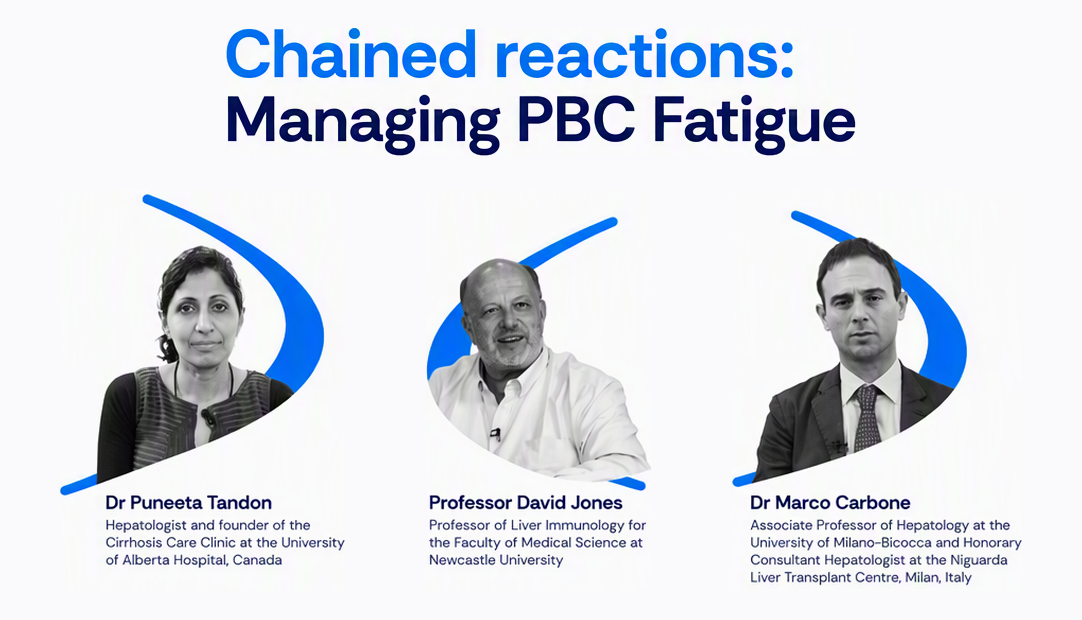
Fatigue is one of the most commonly reported symptoms of PBC and can have a profound effect on everyday life. Yet it can be difficult to recognise, explain and manage. Listening to how patients describe fatigue, understanding its impact and considering symptoms alongside disease control are therefore essential to delivering truly patient-centred care.
Our second expert conversation explores this whole-person approach, from striving for stronger disease control to recognising fatigue as an important part of the burden of PBC.
Finding answers together
There are still questions to answer across rare cholestatic liver disease. That is precisely why continued research, education, dialogue and partnership matter.
At Ipsen, our ambition is to work alongside the rare liver disease community to keep asking those questions and help turn greater understanding into meaningful progress for patients.
How useful was this post?
Click on a star to rate it!