While being diagnosed with cancer isn’t unique- around 20m people are diagnosed with cancer globally each year, and that number is projected to double in next 20 years—how it affects each person is. The unique nature of the impact of a cancer diagnosis creates exponential opportunities to listen and learn from each other, building our knowledge to tackle this ever-evolving disease. Acknowledging this individuality, together with patients themselves, in both care decisions and medicine development, remain integral to improving outcomes for people living with cancer.
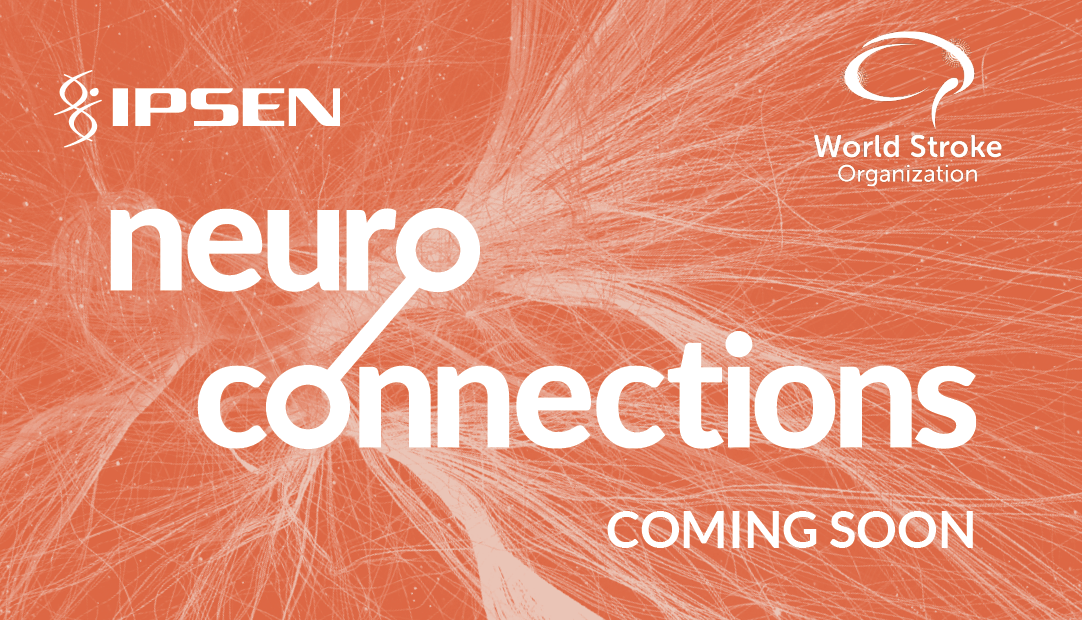
Watch our three-part vodcast series, Neuro Connections, developed in collaboration with the World Stroke Organization, where we discuss current post-stroke care challenges and potential solutions with global specialists, advocates and healthcare professionals.
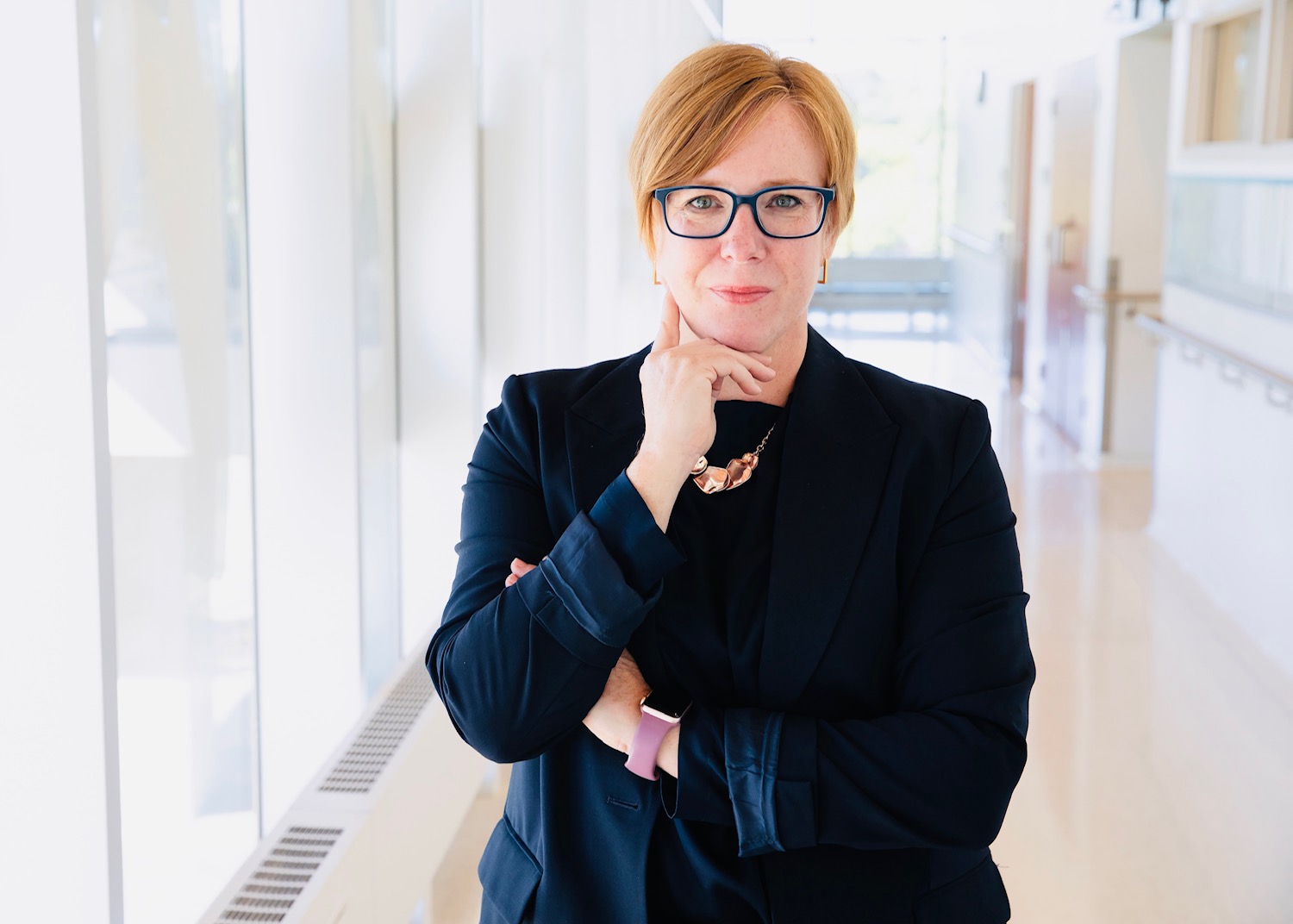
“As we confront the staggering impact of stroke for millions of people around the world, it is imperative that we shine a light on the often-overlooked journey of recovery and support that follows. The Neuro Connections vodcast serves as a crucial platform to not only discuss these challenges but to ignite a global dialogue on improving long-term care for stroke survivors. By prioritizing post-stroke support, we can not only enhance individual lives but also mitigate the broader societal and economic burdens associated with delayed, or inaccessible care.”
Dr. Michelle Nelson, Vice President, WSO
Neuro Connections – Episode 1
This first episode discusses the state of post-stroke care globally and the implications for patients, family members, healthcare providers, healthcare systems, and economies.
Our host, Dr. Michelle Nelson of the World Stroke Organization, is joined by Dr. Monica Verduzco-Gutierrez, a physiatrist in the Department of Rehab Medicine at the Long School of Medicine at UT Health, San Antonio, and Professor Dorcas Gandhi, a neurophysiotherapist at the Christian Medical College and Hospital in Ludhiana, India.
Neuro Connections – Episode 2
The second episode explores what “good” – and even “great” care – looks like for patients in the long-term following a stroke.
In this episode, our host Dr. Michelle Nelson is joined by Dr. Janet Bettger, Professor and inaugural Vice Chair for Research for the University of North Carolina Department of Physical Medicine and Rehabilitation, and Stacie Broek, a patient and public advocate based in Switzerland.
Neuro Connections – Episode 3
Our third and final episode explores the training and education needs of all those involved in the care of patients following a stroke including healthcare professionals, carers and community support workers.
Joining Dr. Michelle Nelson is Dr. Jorge Jacinto, Director of Adult Rehabilitation Services at the Centro de Medicina de Reabilitação de Alcoitão, Portugal and Brina Ludwig-Prout a caregiver from The Change Foundation, based in Canada.
Post-stroke care – European Survey
To further understand the impact of stroke on stroke survivors and their perceptions of care post-stroke, Ipsen commissioned an omnibus survey by CensusWide in the UK, France, Germany, Italy and Spain in September 2023.
Only 1 in 30,000 children are born with ALGS each year1,2 This January, we are standing with the Alagille Syndrome Alliance to help raise awareness of this rare cholestatic liver disease and be #ALGSAware.
“People don’t talk enough about the emotional strain this condition puts not only on us as parents, but on our kids. We not only need to worry about the medical implications – but need to closely watch the emotional impact ALGS can have on the kids as they grow.”– Ashley, parent of children with ALGS.
Alagille syndrome (ALGS) is a rare disease usually diagnosed in the first year of life, with symptoms appearing shortly after birth or in early infancy.1 While it can affect multiple organs in the body, the liver is most commonly involved, often leading to symptoms such as yellowing of the skin (jaundice) that doesn’t resolve itself within a few weeks, pale stools and constant itching.1,3
At Ipsen it is our ambition to develop treatment innovations that we hope will bring about positive change, improving the lives and outlooks of those affected by rare cholestatic liver diseases, like ALGS.
ALGS is caused by a genetic mutation which can be inherited from a parent with at least one of these mutations, or can happen spontaneously before birth.1,4
These mutations disrupt the signalling pathway that plays a key role in the formation of some organs and tissues, including the liver, where it results in a reduced number of bile ducts developing, known as bile duct paucity. This reduction in bile ducts inside the liver decreases the flow of digestive fluid bile through the liver to the intestines, leading to a buildup of bile acids, which can result in liver scarring if not effectively managed.3
“Life with Alagille syndrome means different challenges every day. For our family, meeting and sharing life experiences with others within this community gives us and others a sense of hope and support.”– Eli and Joy, parents of a child with ALGS.
For many liver diseases, for which more than 100 are known5, the journey to diagnosis can often be long and difficult due to lack of awareness of the condition and the unspecific nature of many visible symptoms, such a debilitating fatigue or relentless itch. The emotional turmoil that parents experience when their child or children are impacted by these diseases is distressing, and the journey from symptom suspicion through to diagnosis, treatment and ongoing management of care can affect the entire family. Having a community to share resources, experiences and advice is crucial, and the Alagille Syndrome Alliance (ALGSA) have done this exceptionally well.
Working together with the community we can support action to raise awareness of the disease, to improve diagnosis and to advocate for positive changes that improve the lives and outlooks of those affected. We’re very proud to support this patient organization on ALGS Awareness Day (24 January) and every day, to help raise awareness of this rare liver disease and amplify the patient / caregiver voice. To learn more about the ALGSA and hear more stories from those impacted by ALGS, visit https://alagille.org/get-involved/family-stories/
Ipsen’s Commercial Learning & Development programs are built on close collaboration between our global and local teams. Emily Birch, Brand Manager Oncology, UK; Kerstin Schoenherr, Training Manager, DACH; and Maxime Chesnais, Training Talent Management Director, France, share why cooperation and synergy are so essential and how they have benefitted their own teams.
Ipsen’s approach to Commercial Learning & Development both reflects and aims to respond to the fast pace of life and business in the modern world. Teams mobilized cross-functionally, at both global and local level, strive for excellence and deliver in the field, not only individually, but as a team. This approach guarantees that programs are executed with precision and support both individual and business goals.
End-to-end collaboration for certification at a local level
Ipsen’s certification program was crafted by the company’s global team,with contributions from over 15 local Commercial Learning & Development leaders. The UK’s Oncology Brand Manager, Emily Birch, was part of the collaboration between global and local teams that worked together closely, all the way from development to implementation.
“The UK Decapeptyl Team have really embraced the notion that repetition results in mastery, and we have discussed how annual certification links to our everyday interactions,” she says.
The Ipsen certification program ensures that the company’s field force engages meaningfully with healthcare professionals to foster trust and strengthen its position in the healthcare community.
“We have fortnightly calls where we discuss data, local guidelines, competitors and clinical papers,” explains Emily Birch. “Key Account Managers are using this to build confidence, drawing on a greater variety of data to support conversations with healthcare providers and sharing their experiences within the team. We are committed to improving our knowledge throughout the year and are excited to see it reflected in next year’s certification.”
Attention to detail spells success in microlearning
The Ipsen microlearning project is the epitome of a GloCal collaboration, developed through a partnership of local and global peers from the outset. The initiative unites experts from various regions to share knowledge and best practices, leveraging both global expertise and local insights to create high-impact learning experiences.
The Germany team’s Training Manager, Kerstin Schoenherr, recalls some initial reticence. “At first, my teams were not sure they really needed a microlearning platform,” she explains. “However, when it became clear that it was gamified learning and not an evaluation or performance measurement, it was welcomed, and participation is really high – between 89 and 94%.” Part of that excellent uptake can be attributed to the customization of the program to local needs and norms. “During the translation process, we adapt the microlearning program by picking the questions that work best in German,” adds Kerstin Schoenherr.
Onboarding to unite global and local needs
This strategy of taking a global product and adapting it to local needs is carried over into the company’s onboarding program. Local versions maintain the core framework of the global Learning & Development onboarding blueprint with adjustments made to address specific gaps identified through individual assessments and exercises. This ensures that a program meets local needs without compromising its core essence.
Based in France, Ipsen’s Training Talent Management Director, Maxime Chesnais, is delighted to witness global and local teams working together to become more than the sum of their parts. “It’s great to have a global Learning & Development team so dedicated to building field force knowledge and skills through onboarding,” he says. “In France, we invest significantly in onboarding, which is structured from beginning to end. It is important for newcomers to have everything formalized to develop a better connection with their managers, and to develop core skills and knowledge.”
Making an impact at every level
Everyone at Ipsen is cognizant of the substantial advantages of a collaborative approach. As a result, all the company’s future learning and development initiatives are set to be developed with both global and local input.
Our teams worldwide will therefore continue to reap the benefits of better implementation thanks to stronger, trust-based relationships among international colleagues. Co-creation is definitely the name of the game for Ipsen’s Commercial Learning & Development programs—now and for the foreseeable future.
How do you build best-in-class Commercial Learning & Development programs? We go behind the scenes with the experts: Guillermo Castillo Acero, Head of LATAM and General Manager of Brazil; Audrey Bergeron, Commercial Training Technology Manager, Global; and Marina D’Ascoli, Commercial Training Manager (Italy).
When it comes to learning and development, Guillermo Castillo Acero’s watchword is alignment. “Any successful program must align with the overall strategy,” says the Head of LATAM and General Manager of Brazil. “That was ground zero when we started developing Ipsen’s Commercial Learning & Development programs.”
Through collaboration between global and local teams, Ipsen has created centralized programs for its international field force, preparing teams to work with healthcare professionals (HCPs). This includes the ADAPT program, a microlearning platform, a standardized certification and an integrated onboarding blueprint experience.
Microlearning grounded in best practice
Ipsen’s microlearning platform employs a range of best practices to help users learn.
First, the program employs the principle of glocalization. “The platform exemplifies this kind of collaboration,” explains Audrey Bergeron, Commercial Training Technology Manager. “It was developed together with peers in several regions, leveraging global expertise and local insights to create impactful trainings.”
Second, the microlearning platform relies on best practices in neuroscience and adult learning to teach effectively. For example, trainings repeat questions at spaced intervals, helping users overcome ‘the forgetting curve’, a timeline of 30 days in which nearly 80% of knowledge is lost. By spreading out sessions, users can improve long-term retention.
Third, the platform uses a gamified approach, leveraging the brain’s reward systems to increase engagement. Users can earn points and access a leaderboard, enabling healthy competition among colleagues. This has proven especially effective for field team members, who thrive in competitive environments.
All of this has resulted in greater motivation and knowledge retention. “We wanted it to be clear for the field force that this wasn’t an evaluation” notes Audrey Bergeron. “Once people viewed the learning modules as fun, multiple-choice quizzes, participation jumped.”
A standardized approach to certification
Another core element of Ipsen’s approach is certification. Crafted by a team of 15 global and local experts, the certification program ensures that Ipsen’s field force can engage meaningfully with HCPs and strengthen ties with the healthcare community.
“In Italy, we used to periodically assess our representatives’ knowledge of each local product,” says Marina D’Ascoli, Commercial Training Manager. “The new certification program lets us train employees continuously and in a standardized fashion, which is more efficient and consistent.”
With standardized certification, Ipsen can more easily benchmark individual progress, while gaining a global view of knowledge levels within the company. “Our aim is twofold,” says Marina D’Ascoli. “To build high levels of scientific excellence overall and ensure equivalent knowledge from one field team member to the next.”
Zooming in on ADAPT
Alongside the microlearning platform and certification program, the new suite of Ipsen’s Learning & Development programs includes ADAPT. This transformative program focuses on pharmaceutical promotion, sharpening our field forces’ core skills. The goal is to cultivate the mindset needed to offer HCPs the right solutions, at the right time for their patients.
Designed by the Learning & Development team, the ADAPT program helps develop professional social skills, teaching users how to build trust, relationships and self-confidence. The training is comprehensive to mentally and emotionally prepare our field force to meet with HCPs.
Bringing onboarding into the fold
Onboarding may seem like the odd man out in the Learning & Development program, which mostly concerns ongoing learning. But Ipsen’s experts were keen to include it. “Onboarding is the foundation of employee knowledge,” says Guillermo Castillo Acero. “We want new hires learning from the first day.”
The team saw a strong case for improving onboarding. Studies have shown that well-designed onboarding programs can increase new employee productivity by 70%[1], and improve three-year employee retention rates by 69%[2]. More broadly, strong onboarding can reduce turnover, lower replacement costs, increase employee satisfaction and enhance employer branding.
“This onboarding process is more formalized, creating a stronger connection between managers and new employees,” says Guillermo Castillo Acero. “It reinforces our position that people are the cornerstone of our success, preparing the field force to thrive.”
The results are in
For Ipsen’s Learning & Development experts, the new program is a triumph of collaboration. “I truly encourage other departments to adopt this approach,” says Audrey Bergeron. “Yes, including both global and local input will add time up front. But having everyone’s buy-in makes for higher-quality work, faster execution and seamless implementation.”
“I regularly receive positive feedback from HCPs about our field forces’ knowledge and professionalism,” concludes Guillermo Castillo Acero. “For me, there is no greater proof of the Learning & Development programs’ success. We are clearly equipping our teams with the skills they need, and the healthcare community is taking note.”
References
American Management Association
Society for Human Resource Management
With over 12 million people a year experiencing a stroke globally and over 100 million living with the effects and consequences of stroke, the burden of stroke is high and set to increase.
Thankfully with advancements in acute stroke care, more and more people are surviving strokes, but the range of potential complications they face – including spasticity speech & language difficulties, and cognitive problems – can be life-changing and result in socio-economic consequences for patients, their families, healthcare systems and wider society.
Globally, the indirect costs of stroke – resulting from lost productivity, early retirement, and the burden of informal care upon caregivers – are substantial, for both high- or low-income countries. Improvements in early intervention and rehabilitation are essential to support better patient outcomes. Studies show that early rehabilitation improves physical function, reduces longer-term complications, and enhances stroke survivors’ daily living.
Early intervention and treatment can be particularly effective in preventing long-term movement complications. Achieving improved outcomes such as these enhances stroke survivors’ quality of life and reduces the long-term strain on healthcare resources. Conversely, delayed treatment can lead to increased pain, reduced mobility, and greater long-term care needs – ultimately driving up costs. In particular, evidence demonstrates that prompt spasticity treatment and physiotherapy can significantly reduce overall costs compared to standard care, resulting in fewer hospital readmissions and lower outpatient expenses.
A key goal of public healthcare systems is to reduce the burden of care following a stroke. This includes minimizing hospital readmissions, freeing up essential resources, and providing respite for family caregivers. Caregivers often shoulder a significant burden, impacting their own well-being and finances, with an often substantial emotional and physical toll that can lead to issues such as chronic fatigue, sleep disturbances and mental health challenges. This can lead to reduced work hours, lost productivity, and increased financial strain for both families and healthcare systems. Investing in early post-stroke care can improve patient outcomes and significantly alleviate this caregiver burden.
As a community, we need to advocate for, and adhere to, policies and guidelines that prioritize timely and comprehensive post-stroke care and rehabilitation to reduce costs, improve patient outcomes and support caregivers. To demonstrate Ipsen’s commitment to this, we’re launching Neuro Connections, a new vodcast series developed in collaboration with the World Stroke Organization, that explores the consequences of sub-optimal post-stroke care and identifies potential solutions to improve patient outcomes.
Investing in effective post-stroke care is a societal investment with significant returns in improved health, economic stability, and overall well-being, ensuring a brighter future for stroke survivors and their families.
.
At Ipsen, we are proud to join the global initiative of International Anti-Corruption Day as part of our unwavering commitment to ethical practices and transparency.
Integrity part of the Generation Ipsen Pillar
Generation Ipsen, our transformative sustainability strategy, is anchored by four pillars – Environment, Patients, People and Governance. Integrity is not just a value at Ipsen, it is a fundamental component of the Governance pillar.
We believe that that ethical behavior is essential for sustainable growth and for making positive contribution to society. We’re focused on ensuring that our actions benefit the communities we serve and support a fairer world, and our anti-corruption framework is a testament to our beliefs.
Embedding Anti-Corruption Practices
Leadership and Accountability: Our leaders are committed to setting standards of integrity. They lead by example, fostering a culture where ethical behavior is recognized and rewarded.
Speak Up Culture: We encourage a Speak Up culture where employees feel empowered to voice their concerns without fear of retaliation. This environment is supported by our people’s experience survey, which captures the voices of our employees.
Education and Awareness: We continue to educate our employees about the risks and consequences of corruption. Regular communications, trainings, and resources ensure that everyone at Ipsen is well-informed and vigilant.
United Against Corruption
Integrity at Ipsen is non-negotiable. As we observe Anti-Corruption Day, we invite all of our stakeholders — investors, business partners, healthcare professionals, patients, media —to join us in this commitment. Your support and collaboration are crucial in fostering a culture of integrity and transparency.
Biliary atresia (BA) is a rare liver disease that usually appears in the first month of a baby’s life.1This BA Awareness Day, we’reproud to support BARE to help raise awareness of this condition.
Biliary Atresia (BA) is a rare liver disease that usually appears in the first month of a baby’s life.1 In this disease, the bile ducts in the liver may not develop as expected, or become obstructed shortly after birth, causing harmful substances such as bile and toxins to build-up and damage the liver.2,3 A surgical procedure, called Kasai, can be performed, ideally within the first two-three months of life, to allow the bile to drain directly from the liver to the intestines, which when successful means the child can keep their own liver for several years. A liver transplant may still be needed later in life.4
1 December is BA Awareness Day, an important initiative led by the patient organization BARE. Join us in raising awareness of the signs, symptoms and impact of this rare liver disease on families all over the world. To learn more, scroll down or visit the BAREwebsite.
What are the first signs and symptoms of BA?
BA can be difficult for parents, caregivers or even healthcare professionals (HCPs) to identify straight away. As with many cholestatic liver diseases, the build-up of bile and toxins can cause jaundice (yellowing of the skin and eyes), which often overlaps with the harmless jaundice seen in newborns during the first few weeks of life.1 Jaundice that persists beyond the first two weeks, in addition to dark urine and pale stools are common symptoms of BA.5
What causes BA, and how is it managed?
The cause of BA is unknown, however up to 20% of babies born with BA are also born with problems with other organs, such as heart defects or issues with their spleen, suggesting the potential for a genetic influence.1,6
Surgical intervention remains the mainstay of treatment for BA, after which there will be long-term follow-up with doctors and other healthcare professionals to manage and monitor the child’s health. A liver transplant is only considered when other treatments are ineffective. The aim of liver transplantation is to restore the child to good health and is eventually needed in up to 80% of children before the age of 20 years.7
Looking to the future
Raising awareness of BA can have a huge impact – shortening the time to diagnosis can improve the success rate of surgical intervention, put patients in the care of specialists who can help manage the condition and provide access to support groups, which can provide emotional and practical support for the whole family. At Ipsen, we advocate for, innovate and aim to secure positive changes for those impacted by rare cholestatic liver diseases such as BA. Our focus on liver disease is rare.
Visit BARE’s website to learn more about Biliary Atresia (BA)
He L, et al. 2021. Biomarkers for the diagnosis and post-Kasai portoenterostomy prognosis of biliary atresia: a systematic review and meta-analysis. Scientific reports. 3;11(1):11692.
How do Ipsen’s Commercial Learning & Development programs enable it to bring the full potential of its innovative medicines to patients? We discuss the programs’ goals with Bartek Bednarz, EVP Head of Global Product and Portfolio Strategy; then discover their impact on the ground with Mahdi Hedjal (North Africa) and Sabine Rupeika (Nordics/Baltics).
For Bartek Bednarz, the healthcare industry is increasingly time-poor. “Medical technology evolves rapidly, pushing healthcare professionals (HCPs) to constantly adapt. Aging populations means HCPs are facing an influx of patients requiring complex, long-term care, while innovative healthcare delivery models, such as telehealth, put HCPs on call at all times.”
For pharmaceutical field teams, this creates a challenge. “Every minute a healthcare professional spends with a medical field representative is time not spent with patients,” notes Bartek Bednarz. “So every interaction must add value.”
This is the driving force behind Ipsen’s innovative Commercial Learning & Development programs. By investing in our people and giving them a detailed understanding of our treatments, we can efficiently provide information to HCPs to help them get the right medicines to their patients.
A foundational core of knowledge
When field force members meet with HCPs, they have several goals. First, to educate HCPs by providing in-depth knowledge about a product, including clinical efficacy, safety and unique discussion points. Second, to contribute to patient care, recommending the right products for the right patients and advocating for treatments with better patient outcomes. Third, to understand HCPs’ pain points and gain insight into treatment gaps, while collecting feedback about product performance and real-world usability.
“Members of Ipsen’s field force need to master our products to succinctly communicate their value,” says Mahdi Hedjal, Transformation, BEX and Digital Director, North Africa. This is crucial because field teams do not typically have the products they’re presenting on hand. “When our reps present, they must be precise,” notes Bartek Bednarz, “because the HCPs will associate that person – their expertise and clarity – with the eventual product.”
This means that field teams must be well-prepared, ensuring their messages resonate effectively and their products add value. The best way to do that? Know the product, inside out. “Knowledge is king,” says Bartek Bednarz. “HCPs don’t have time for anything less than a thorough understanding of medical treatments and innovations.”
Sabine Rupeika, Commercial Excellence Lead for the Nordic/Baltics, agrees. “For our field force, keeping up to date on products and adapting to changing healthcare needs is essential. In my region, we create a cross-functional Learning & Development roadmap each year, focusing on strategic needs and responding to evolutions in healthcare.”
Effective support for launches
Ipsen’s Commercial Learning & Development programs help field force members gain the knowledge and skills to be effective, offer relevant solutions and get the right treatments to patients. Programs provide product knowledge certification, functional skills training and mindset development to help build expertise and ownership.
These programs are especially valuable for supporting new medicines or indications launches. For a launch, field force members must understand how the product fits into the patient journey, from treating a disease to improving quality of life. Launches should fit into the larger context of healthcare, addressing real needs for HCPs and patients and be handled with confidence.
“Medical field representatives are a critical channel to deliver information about new products to HCPs to explain the benefits to patients and society,” says Bartek Bednarz. “At Ipsen, we have several launches planned over the next four years, as we build out our Rare Disease franchise and strengthen Oncology. So, there is a great deal for our field teams to learn.”
“Preparing for a new product or indication launch involves complex, detailed planning from multiple teams,” adds Sabine Rupeika. “We develop a value proposition, perform market research, ensure regulatory compliance, engage with key opinion leaders and create an access strategy – all things our field force needs to understand.”
“In Algeria,” says Mahdi Hedjal, “there are extensive onboarding and training courses and interventions for those who present products and all medical field representatives must be certified before the launch. That’s how we bring the best image of Ipsen to the market, increase our chances of meeting HCPs and make a positive impact.”
Best-in-class Commercial Learning & Development programs
Ipsen’s Commercial Learning & Development programs are being implemented worldwide, providing core training opportunities for all field force members. “It makes our field force great advocates for our solutions,” says Sabine Rupeika. “It gives them ownership, structure, and responsibilities and helps them work cross-functionally with other teams.”
Above all, these programs are a source of pride. “Our teams have made tremendous progress, rapidly implementing these transformative programs,” says Bartek Bednarz. “By equipping our field teams with the knowledge they need, we can support both HCPs and their patients in the right way.”
To explore careers opportunities at Ipsen, visit our Careers page HERE.
Ipsen’s Commercial Learning & Development programs are part of a culture of continuous leaning that benefits our entire organization—and, ultimately, patients. Together with Ioana Parsons, General Manager of the UK & Ireland, Michael Grant, Head of Strategy & Business Excellence, Australia & New Zealand; and Vasilis Vasilikis, Business Excellence Lead, Greece), we discuss what makes these innovative programs work.
When Ioana Parsons, General Manager of the UK & Ireland, thinks about continuous learning, she sees one part of a larger puzzle. “Business performance reflects overall organizational health,” she says. “Plenty of data shows that ‘healthy’ organizations perform better – and to be healthy, a company needs equal parts hard and soft skills, working together.”
For Ipsen, this means taking the time to invest in the growth and success of our field force through Commercial Learning & Development. These programs equip employees with the product knowledge, skills and mindset needed to build valuable relationships with healthcare professionals (HCPs) and empower them to answer key questions.
Available at the global level, these programs can also be adapted locally. The goal is to embed continuous improvement within our teams and company, helping employees learn relevant skills at their own pace and build knowledge over time.
Flexible programs tailored to employee needs
“Ipsen has a culture of collaboration and excellence,” notes Ioana Parsons. “We aim to ensure that both our field force and office-based teams are knowledgeable about our products.”
This is part of Ipsen’s commitment to being a High-Performance Learning Organization (HPLO), a core element of the company’s strategy. HPLOs often outperform other organizations by being more innovative, better at meeting customer demands and having higher employee engagement. “This means training our field force on more than just communicating with HCPs,” says Ioana Parsons. “They need to know how to collaborate with our office-based teams and use the learning tools we provide.”
For this reason, Ipsen’s innovative Commercial Learning & Development programs are designed to develop employees’ skills from any starting point. “They work for senior employees and new hires alike,” says Vasilis Vasilikis, Business Excellence Lead in Greece, “and can be easily adapted to local needs. That’s one of Ipsen’s greatest strengths – the ability to recognize that each field force faces different challenges and needs tailored support.”
Combining technical innovation with best practice
As technology has changed, so has the healthcare industry. “The medical field is very saturated,” says Ioana Parsons, “so our field force needs to closely follow the latest trends, innovating, exploring and upskilling.”
Ipsen’s programs are designed to meet those needs, being co-constructed with the people and countries who use them. Built around the latest developments in neuroscience and best practices for adult learning, program content is practical, adaptive and applicable to real-life interactions with HCPs. For example, our microlearning program draws on best practices around spaced repetition and the forgetting curve by repeating questions over intervals to improve knowledge retention.
“The microlearning platform is fun and user friendly,” says Michael Grant, Head of Strategy and Business Excellence, Australia & New Zealand. “It has made it simple to measure knowledge retention and keep people motivated by showing them their progress.”
Encouragement and engagement are key features of the Learning & Development programs. “We want our programs to provide a positive experience, for employees to find them enjoyable and empowering,” notes Vasilis Vasilikis. “And so far, so good. Our field force is always asking for more – I have to keep telling them to wait for the next installment.”
These updates are never long in coming. Ipsen has been at the frontier of innovation in pharmaceutical learning & development for several years, leveraging the latest technologies to support teams. When long-distance, app-based learning appeared, Ipsen was a first-mover, bringing new learning options to our field force. Now, as the market turns toward artificial intelligence (AI), we are exploring AI’s potential to offer personalized, role-play-based training to employees.
“We’re equipping our teams with next-generation skills,” says Michael Grant. “By embedding AI into our training, we can help field forces acquire the knowledge they need to present the right information to HCPs accurately, concisely and effectively.”
Through these kinds of company-wide innovations, Ipsen is enabling employees to meaningfully engage with HCPs to focus on what matters for patients. “I’ve been with Ipsen for 23 years,” says Vasilis Vasilikis, “and the Commercial Learning & Development programs are one of our best initiatives. Commercial Learning & Development programs are purposeful and targeted, supporting our field teams at every turn.”
“We’re lucky to have a global Commercial Learning & Development team dedicated to our field force,” concludes Michael Grant. “In the healthcare world, technology is always changing, the market is always moving and it’s your job to keep up. Having in-house experts available to train you at any moment is invaluable.”
To explore careers opportunities at Ipsen, visit our Careers page HERE.
You are now leaving the Ipsen group global website. To continue, please click on Continue?