When Access to Care Becomes Personal: Amit Patel’s Story
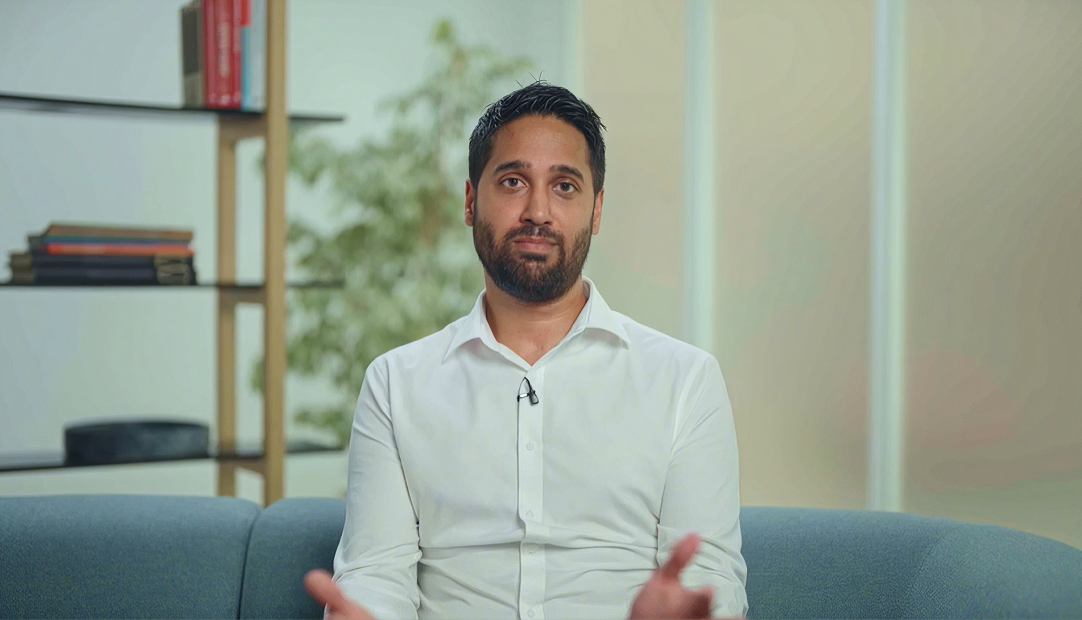
Access to healthcare is more than a professional challenge. For Amit Patel, Medical Lead in Neuroscience at Ipsen UK, it became deeply personal when his father was diagnosed with bowel cancer. An experience that changed how he viewed his work and strengthened his determination to help more people receive the care they need.
When Personal Experience Changes Your Perspective
A pharmacist by training, Amit began his career in community pharmacy, helping patients directly with their everyday healthcare needs. Wanting to make a difference on a broader scale, he moved into the pharmaceutical industry.
But it was his father’s experience with cancer that gave his work an even deeper meaning.
Diagnosed with stage three bowel cancer, his father underwent treatment, but the disease subsequently spread. During the COVID-19 pandemic, access to follow-up care became particularly challenging, leaving Amit wondering whether earlier intervention might have made a difference.
“I felt devastated, because before being a healthcare professional, I’m a son.”
For Amit, the experience brought a painful sense of helplessness, but also reinforced his determination to use his professional knowledge to help others.
“If I can use where I’ve come from to maybe channel that into helping others, that’s where I’d want to be.”
Helping More Patients Access the Care They Need
Today, as Medical Lead in Neuroscience at Ipsen UK, Amit works closely with healthcare professionals, providing scientific information and supporting initiatives that aim to improve patient care.
One example is his work with clinicians to support earlier identification of post-stroke spasticity, a condition that can develop following a stroke and may lead to further complications.
By collaborating with healthcare professionals to explore ways of identifying patients earlier, Amit and his colleagues hope to support earlier identification and better patient care.
Finding Purpose Through Action
Amit’s personal experiences continue to shape his approach to work. They remind him that behind every healthcare challenge is a person, a family and a life that could be affected.
That sense of purpose is also reflected in how he describes the culture at Ipsen, where collaboration, openness and a shared determination to make a difference encourage people to work together.
“We’re not just about saying, we’re about doing. And I think that’s the difference. We’re there and we want to make a difference.”
For Amit, making a difference is not about one achievement. It is about continuing to find ways to improve care, support healthcare professionals and help more patients.
His story reminds us that purpose often comes from the most personal experiences, and that sometimes, the greatest motivation to help others comes from knowing what it feels like when someone you love needs help.
How useful was this post?
Click on a star to rate it!