“In order to help all partners understand the value of a medicine, we provide the wrap-around support of data coming out of clinical trials.”
Clinical trials answer specific questions in very structured settings and under controlled conditions. Seema Meloni’s team ensures those answers exist within a broader context.
Her focus is on real-world evidence strategy: defining unmet needs, quantifying disease prevalence, and understanding “what the world looks like with or without our therapies.”
She works across asset teams to build a comprehensive evidence package alongside the clinical development plan. Clinical trials show efficacy and safety under controlled conditions. Real-world evidence complements trials by capturing the full patient experience and how a medicine performs across broader populations. Her team generates additional evidence to answer those questions and place trial results into context.
“One of the biggest challenges in pharma is external acceptance of real-world data,” she says. “In these cases, we have less control over data collection and the quality of what is collected compared to traditional randomized control trials, so we have to work hard to ensure we introduce strategies to find the highest quality data and analyze them in the most robust way.”
Randomized trials remain essential. But she argues that in many instances they are not sufficient on their own to support all scientific and business needs. “We often need additional supportive data to complete the full package of understanding the benefit-risk profile of a medicine,” she says. That requires studies designed with scientific rigor while providing broader data sources to various key external stakeholders.
“The risk is that without a comprehensive and feasible evidence strategy, treatments that work won’t reach the patients who can benefit from them or can sometimes get removed from the market,” she notes. The consequence is not abstract. It affects patients who may rely on those medicines.
Her conviction was shaped early in her career. After completing her doctorate, she joined an effort to scale HIV treatment across multiple African countries. “It was trial by fire,” she says. She built electronic medical records systems to capture data at scale, learning how evidence informs patient access, ethics, and policy.
Today, that perspective remains central. “Science with Purpose is making sure we are being responsible and making decisions based on comprehensive, high-quality data,” she says.
Evidence is integral. It is protection for patients, for decisions, and for the future of medicines.
After 25 years working in oncology, Jon Travers understood the impact cancer can have on patients and their families. Throughout his career, he had been driven by the possibility of helping bring new treatments to the people who need them most.
But around ten years ago, that mission became deeply personal.
When Jon’s mother was diagnosed with a recurrence of melanoma, it was the third time she had faced cancer. Nearly two decades after her previous diagnosis, the disease had returned, and the outlook was poor. Like many families facing a cancer diagnosis, they were confronted with the possibility that they might have very little time left together.
An opportunity to access an innovative treatment through an expanded access program changed the course of that journey.
The treatment gave Jon’s mother an additional year of life and, most importantly, an additional year of quality life. It gave the family time to be together, create memories, and share moments they might otherwise never have had.
Witnessing that impact firsthand changed the way Jon viewed his work. What had once been a professional commitment to innovation became a personal understanding of what new medicines can mean for patients and the people who love them.
Today, as Senior Director, External Innovation, that experience continues to shape the way he approaches every opportunity. Beyond the science and the data, he sees the potential human impact behind every innovation Ipsen explores.
For Jon, the value of a new medicine is measured not only by clinical outcomes, but also by the time it can give patients and families, and the moments that time can make possible.
His story is a reminder that innovation can create something precious: more time together. Sometimes, even one extra year can make all the difference.
For Elise, illness has always been something very real and personal. Although she does not work directly with patients, she understands what it means to support a loved one through illness. It is an experience that showed her how quickly a diagnosis can impact daily life and reshape family routines.
Between medical appointments, administrative tasks, and unexpected challenges, families often have to adapt to a new reality. Over time, Elise realized that caregiving is not only about supporting someone through treatment, but also about finding the right balance between caring for a loved one, personal life, and professional responsibilities.
Some situations left a lasting impression on her, particularly seeing children in hospital whose parents could not always be by their side. These moments highlighted a reality many caregivers face: wanting to be present for a loved one while managing the demands of everyday life.
.
This experience reinforced her belief that presence, listening, and emotional support are just as important as practical assistance. Yet caregivers often remain behind the scenes, despite the essential role they play throughout the care journey.
With this in mind, Ipsen has introduced caregiver leave. This initiative gives employees the time they may need to support a family member or loved one when circumstances require it, without having to choose between their caregiving responsibilities and their professional commitments.
For Elise, this initiative is first and foremost an acknowledgment of the reality many families experience. It reflects the belief that caring for people also means supporting those who care for them every day.
“We need to make sure that it’s scalable, safe, and reproducible—so that every patient gets the same medicine every time.”
As a CMC lead focused on new asset development, Ian Fox works at the intersection of research and application—taking promising molecules and turning them into real-world treatments. He explains his work as “a kind of bridge between early research identification of a target area and making the end product a sustainable, controlled, safe, quality product that can meet a patient’s needs.”
Ian supports the push from medicinal chemistry into clinical development, translating discovery into consistent, high-quality products. That means evaluating manufacturing processes early, making sure they are viable not just in theory but in scale. “It has to be always the same quality, the same dose, the same perfect medicine every time,” he says.
Ian did not begin in development. His journey started in commercial manufacturing, then he saw an opportunity to move closer to impact. “The move into pharmaceutical development gives me the opportunity to reach more patients and change their lives.”
That shift required growth. He “climbed the ladder” and completed a master’s focused on innovative manufacturing. Ipsen’s structure allowed him to move across teams, expand his technical scope, and step into a role where science connects directly to patients.
He believes the future lies in better tools and deeper collaboration. “With advancements in AI, we might reduce the risk or the level of testing we have to execute—through more effective modeling,” he says. “Tools like this will aid scientists and let us focus more on the work itself.”
In the end, for Ian, everything comes together through collaboration. “If we can’t collaborate, the product doesn’t make it to market. By working together, we work towards delivering the same results for every patient every time.”
What a start to 2026! We announced excellent financial results today.
Total sales grew by 23.5% at constant exchange rates, driven by double-digit sales growth in all three therapeutic areas: +15.6% in Oncology, +108.0% in Rare Disease and +16.6% in Neuroscience.
This follows a series of announcements that highlight the great progress we have made since January: two acquisitions and three positive topline results in clinical trials in both chronic and episodic migraine, as well as in primary biliary cholangitis.
For Rajminder, the past five years have been marked by challenges that affected every aspect of her life. As a mother and a wife, she struggled to fully participate in the moments that mattered most, while navigating a condition that proved difficult to treat.
After several unsuccessful treatment attempts, she found herself running out of options. Conversations with her healthcare team increasingly focused on what could come next and whether another treatment might be able to make a difference.
When she finally started a treatment that worked for her, the impact was felt far beyond symptom management. It enabled her to regain parts of her daily life that she had lost over the years: spending time with family and friends, enjoying everyday activities and, most importantly, being present for her daughter.
.
Those experiences have given Rajminder a unique perspective on the impact medicines can have on patients and their families. Having lived through the uncertainty of failed treatments and the life-changing difference of finding one that worked, she understands firsthand what is at stake for people waiting for new therapeutic options.
Today, that personal experience brings a deeper meaning to her role at Ipsen. Knowing what it feels like to be a patient searching for answers, she is reminded every day of the importance of the work being done across the organization. For her, it is not just about developing and delivering medicines. It is about helping people regain moments, opportunities and experiences that may have once seemed out of reach.
Looking back, Rajminder reflects on how difficult it was to imagine a brighter future during her toughest moments. Today, however, she sees her journey differently. It has reinforced her appreciation for the people working to advance treatment options and strengthened her belief in the difference those efforts can make in patients’ lives.
Rajminder’s story is a powerful reminder that behind every medicine is a human story, and that for some patients, finding the right treatment can open the door to an entirely new chapter.

.
Jennifer Schranz, Senior Vice President, Head of Rare Diseases
The human cost of a system out of balance
Over the years, I’ve seen firsthand how crushing fatigue and relentless itching can define daily life for so many people living with rare cholestatic liver diseases. It disrupts sleep, work and family life – all visible signs of a body struggling to maintain biological balance. These symptoms come from cholestasis, where bile flow from the liver is impaired, leading to a toxic accumulation of bile acids, heightening the severity of symptoms and driving progressive liver damage. But despite advances in our understanding, treatment options remain limited. It raises an important question: what if the key to new treatments lies in understanding the wider role bile acids play in the body?
Bile acids: the bigger story shaping the future of research
For a long time, bile acids were mainly discussed in terms of the damage their build-up can cause in the liver. But advances in cholestatic biology are revealing a much broader picture. Bile acids are now recognized as powerful signaling molecules that influence metabolism, inflammation and immune function throughout the body.
As this understanding has grown, so too has the way researchers approach rare cholestatic liver diseases. The focus is no longer only on impaired bile flow, but on the biological imbalances that drive disease progression. Across rare liver disease research, this shift is opening new avenues for treatment. Today, approaches such as IBAT inhibitors, PPAR agonists, FXR agonists and microbiome-modulating therapies are all being explored, reflecting a deeper understanding of bile acid biology.
What’s particularly exciting is how these advances are beginning to reshape the way we think about care. By intervening earlier and targeting the drivers of disease, we can begin to move beyond symptom control alone. Biomarkers such as alkaline phosphatase (ALP) – a marker of cholestasis where normalization is tied to better long‑term outcomes – are increasingly helping guide treatment decisions.
Ipsen: putting this science to work for patients
At Ipsen, our approach in rare liver disease is built on a deliberate shift: understanding bile acids as a complex, system‑wide driver of disease and daily patient burden. This perspective defines how we accelerate our science – shaping the pathways we focus on and the clinical trials we design to deliver meaningful impact.
Across five rare cholestatic liver diseases, we are advancing a focused research strategy grounded in emerging insights in bile acid biology, applying this understanding to develop therapeutic approaches.
Every scientific breakthrough begins with a question: can this medicine extend life, restore balance, or meaningfully change what is possible for patients? At Ipsen, we are bringing that same discipline to artificial intelligence, asking whether it can help our teams analyse data in new ways, reduce rework and make better, faster decisions in pursuit of science with purpose.
This is the aim of our pilot with the Claude for healthcare and life science team: to test hypotheses in real research and business workflows, measure impact and learn quickly with responsibility embedded from the outset.
Launched in May 2026, the pilot brings together over 40 colleagues across Ipsen’s Research & Development and Medical organizations to work on a defined set of use cases spanning external innovation assessments, scientific literature synthesis, knowledge generation and clinical development workflows. The objective is to focus on high-value activities where teams routinely navigate large amounts of complex data and must produce consistent, high-quality outputs. Participants are exploring the platform using tools including Claude Science and Claude Code.
In healthcare, how AI is used matters as much as what it can do. This pilot is therefore being run with a strong focus on governance, appropriate access, ensuring the right controls are in place and that teams use these tools responsibly.
This is not AI for AI’s sake. Ipsen’s ambition is to bring medicines to patients sooner. This pilot is a focused test of where AI can support that ambition, responsibly and with scientific rigour. Not every step in the delivery of medicines to patients can be accelerated but improving how and when decisions are made and reducing friction in complex analytical work, can make a meaningful difference.
Anne Petit does not wait for instructions. She knows that in pharmaceutical development, her team often moves first. “We always need to anticipate the next development phases of a clinical program,” she says. “We need to manufacture the product. It takes time.”
Anne leads formulation and process development at Ipsen, where she supports medicines from early nonclinical work through clinical trials and into commercial transfer. Her team defines how the medicine will be made, how it will be delivered, and how the product will perform—long before most colleagues have begun their phase of work.
Anne comes from a family of scientists, so it was natural for her to continue in the family business of sorts. She trained as a chemist and considered pharmacy, but found her direction during a PhD focused on peptide formulation. “That was really the first time I worked on formulation with the intent to go to patients,” she says. The work included drug product manufacturing and in vitro testing and in vivo evaluation in mice. For Anne, this work was “patient-centric,” she says. “That’s when I knew it was what I wanted to do.”
Today, the work demands a combination of speed and foresight. “We need to define several things, even something as simple as the color of a capsule, way ahead of the commercial launch.” This is done to generate stability data for dossiers. Small choices carry regulatory consequences, and deadlines cannot be missed.
Anne sees her group as the link between vision and reality. “People have an idea for a new medicine,” she says. “We are already there, adapting to the request. But we need time. And we need to anticipate decisions.”
She also keeps her focus on the clinic. “We are in the middle of everything,” she says. “We need to ensure we are manufacturing enough product on time, so there will be no issue when the clinical study runs.”
Anne sees potential in AI and in silico tools, but she stays grounded. “At the end you will still need to have experiments,” she says. “Because your molecule will be unique.”
At Ipsen, medical insights are not an end in themselves. They help us better understand the reality experienced by patients, healthcare professionals and health systems so we can make better decisions across our organization.
This matters because quality insights can lead to clear and focused action: shaping evidence generation, informing medical strategy, strengthening cross-functional decision-making and helping Ipsen respond more effectively to unmet needs. At the heart of this approach is a simple principle: curiosity and active listening can help us act for patients and society.
This reflects Ipsen’s broader strategy: a science-led, patient-driven approach that turns knowledge into enterprise-wide impact. By embedding patient insights and robust data into decision-making, Medical helps connect what we learn through scientific engagement to the strategic choices that shape our evidence plans and portfolio priorities across Oncology, Rare Disease and Neuroscience. This ensures that, as we advance our pipeline and strengthen our portfolio, patient needs remain central to how we create value, guide investment and deliver meaningful impact for the communities we serve.
To make this work in practice, Ipsen focuses on four connected capabilities:
Structured insight generation
aligned to quality standards, to bring the right capabilities in curiosity and listening for insights and to capture what matters most and connect evidence to strategic priorities.
Strong governance and prioritization
to ensure insights are synthesized, assessed and acted on by the right teams.
Digital, analytical and AI-enabled capabilities
to identify patterns faster and support more informed decisions.
Cross-functional activation
so insights can shape action across Medical, R&D and beyond.
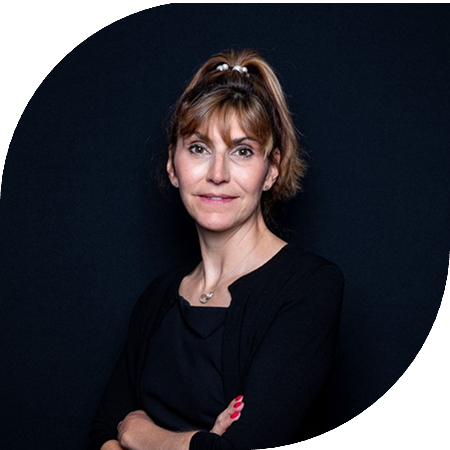
“When insights are brought together systematically across markets and therapeutic areas, they can help identify shared needs, guide evidence generation priorities and strengthen alignment across functions and geographies. In this way, global strategy is informed not only by data, but by a clearer understanding of what matters most in practice.”
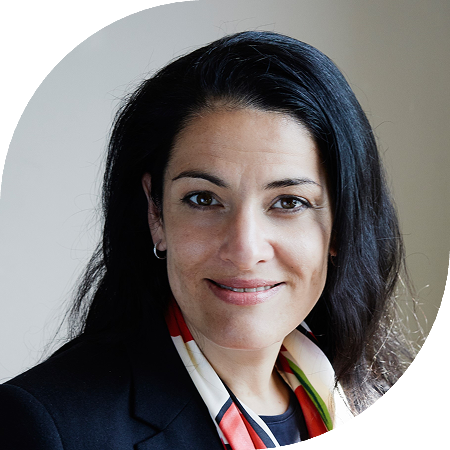
“Insights have the greatest value when they help teams respond to the realities of their healthcare environment – whether by refining engagement, informing local evidence needs or improving collaboration across functions. This is how strategy becomes more grounded, more relevant and ultimately more useful for the communities Ipsen serves.”
Together, these perspectives show that elevating medical insights is not simply about gathering more information. It is about creating the conditions for insight to become action – through shared ownership, clear priorities and a commitment to using what we learn to improve decision-making for patients.
As Ipsen continues to expand our portfolio at every stage of development, turning insights into action will remain essential to how we work. It helps us listen more effectively, learn more systematically and act with greater focus across global and local settings.
Because at Ipsen, the value of insight lies in what it helps us do: make better decisions, work better together and create greater impact for patients.