Five years of turning ambition into impact
2025 marked five years of Focus. Together. For patients and society. Guided by this strategy, we have embarked on exciting new partnerships, expanded our pipeline and portfolio and shared promising data from our clinical trials. All of this broadened the range of options for patients living with difficult-to-treat conditions in oncology, rare disease and neuroscience.
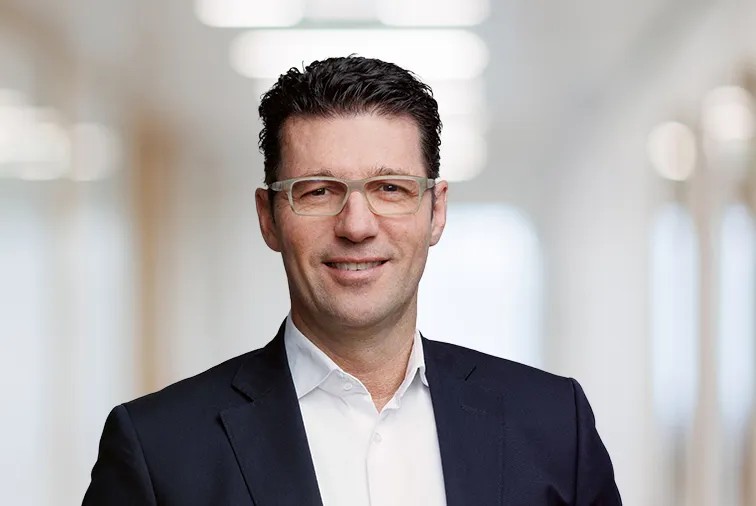
David Loew, Ipsen’s CEO, reflects on how we translate strategy into results.
What have we achieved in the five years since the launch of our strategy?
David Loew: We expanded our portfolio and delivered treatments where they are most needed. In 2020, we had approved medicines for 20 indications, and we’re ending 2025 serving 32 indications.
We’ve achieved this by expanding our pipeline and drawing on our existing treatments and expertise. For example, this year our long-standing asset, Cabometyx®, was approved in a new indication in the E.U.: previously treated unresectable or metastatic neuroendocrine tumors.
And we’ve grown our core operating margin to 35.2% of total sales, giving us more resources for research and development and launching medicines. Last year, we issued our first public bond of €500 million, giving us even more firepower for external innovation.
Now our pipeline is diversified and richer than ever. We’re developing assets that have best- or first-in-class potential, leveraging our expertise at our global hubs. And we’ve embarked on strategic partnerships, notably in 2021 with GENFIT, and in 2023 when we acquired Albireo, which laid the foundation for our work in rare liver disease. In December 2025, we partnered with IRICoR at the Université de Montréal and Simcere Zaiming, a leading oncology biotech.
Ultimately, this is improving outcomes for patients. Take for example our rare liver disease franchise. In 2021, we set out with a goal: to develop treatment options for rare cholestatic conditions. We worked quickly, because there is no time to lose for these patients or their families. And only a few years later, we have two medicines approved in three rare cholestatic indications and the potential for additional indications. We’ve built a leadership position in rare liver disease in record time.
Along the way, we’ve fostered a global culture of collaboration, excellence and impact. In 2025 we reached 30 Great Place to Work® certifications, and we achieved gender parity in our Executive Leadership Team. This was one of our core commitments we set ourselves in 2020, and I’m proud that we’ve fulfilled it.

What were some of Ipsen’s stand-out achievements in 2025?
David Loew: It was a strong year, with €3.7 billion in total sales. All our therapeutic areas grew, especially Rare Disease where sales increased 102.5% compared to 2024. This was largely driven by quarter-on-quarter acceleration in sales of IQIRVO®, which just launched last year to treat primary biliary cholangitis, a rare liver disease.
Our teams also shared clinical trial data around the world. Crucially, we had the IPN10200 proof-of-concept readout in aesthetics, which demonstrated that our proprietary recombinant molecule has a first-in-class, long-acting clinical profile. We are thrilled to begin Phase III trials of this potential breakthrough in aesthetics.
We achieved regulatory milestones, like our submission of Ojemda® (tovorafenib) in pediatric low-grade glioma, which was accepted by the European Medicines Agency. In April 2026, it was approved in the E.U. as the first targeted therapy in relapsed or refractory pediatric low-grade glioma regardless of BRAF alteration.
And we continued to find new external innovation opportunities. We acquired ImCheck Therapeutics, strengthening our leadership in oncology and building our expertise in hemato-oncology.
What are you most looking forward to in 2026?
David Loew: We’re at the start of an exciting new phase, as we’re anticipating three key data readouts and the addition of three new late-stage clinical programs to our pipeline.
We’ll be sharing data on corabotase in glabellar lines at the SCALE conference, and we will also get the phase II data in frontal head and lateral canthal lines in aesthetics. And we look forward to testing it further as a potential treatment for adult upper limb spasticity and chronic and episodic migraines.
In the early and pre-clinical pipeline, we’re investigating exciting new modalities that could transform standards of care. This includes MAP kinase inhibitors that block the growth and replication of cancer cells, antibody drug conjugates that deliver targeted treatment payloads and T cell activators that harness the body’s own immune system to fight cancer.
Beyond the pipeline, I’m also pleased by our achievements in sustainability. We received certification from the Science Based Targets initiative, confirming our sustainability goals meet the highest standards and are grounded in science across our business. And as of last year, 100% of our electricity comes from renewable sources.
And we will build on this energy with our new sustainability strategy. It focuses our efforts around four pillars: access to healthcare, human impact, climate action and responsible business. By concentrating our work in each of these areas, we aim to enhance our positive impact in the long term.
What comes next for Ipsen in 2027 and beyond?
David Loew: Our strategy is having a huge impact, but that doesn’t mean we can rest on our laurels. Our sustainable growth tomorrow depends on where we focus our efforts today. Looking ahead, we’ll continue to seek out molecules with first- or best-in-class potential, work to develop them into treatments, and partner with healthcare systems to bring them to patients worldwide. That’s our commitment, and as we’ve shown this year, we’re fully prepared to deliver on it.

“Our sustainable growth tomorrow depends on where we focus our efforts today.”
Ipsen’s 2026 outlook
>13.0%
total sales growth at CER
>35%
core operating margin