Our strong sense of purpose
With more than 35 years of oncology experience, we are driven by a strong sense of purpose: to prolong patients’ lives, improve health outcomes and create a positive impact for patients and society.

Our commitment to oncology
Our deep heritage and expertise in oncology innovation and treatment means we can focus on what’s most important – improving the lives of people living with cancer now and in the future.
Our commitment to patients
Being given a cancer diagnosis is life-changing, and while there are more treatment options available than ever before, there is still an urgent need for innovation. We have an unwavering commitment to serve patients with some of the most difficult-to-treat cancers. Across oncology, we work with over 100 patient organizations worldwide and are committed to supporting programs in raising awareness of topics that are important to the communities we serve.
Key facts

A strong oncology portfolio
We have 6 assets supporting people living with cancer worldwide.

Over 35 years’ experience in the field
Ipsen entered the field of oncology in 1986, and today has a portfolio that includes therapies for cancers of the kidney, liver, thyroid, pancreas, prostate and breast, and which addresses neuroendocrine tumors, follicular lymphoma, and epithelioid sarcoma.

Kidney cancer
Over 400,000 new cases of kidney cancer are diagnosed worldwide each year. 90% of which are renal cell carcinoma (RCC). Up to 30% of patients present at diagnosis with advanced or metastatic RCC.

Investing in the future of oncology
Driven by a science-first strategy and unmet patient needs, we continue to expand our oncology portfolio. Through exploring the potential of modalities such as antibody drug conjugates and T-cell engager immunotherapies, we hope to unlock new therapeutic options for people living with cancer around the world.
Our expertise in oncology
Oncology is Ipsen’s largest therapeutic area and we’re proud to be playing a pivotal role in the treatments available to patients across 9 different forms of cancer
Over 400,000 new cases of kidney cancer are diagnosed worldwide each year, 90% of which are renal cell carcinoma (RCC). At diagnosis, up to 30% of patients present with advanced or metastatic RCC. If detected in the early stages, the five-year survival rate is high, but for people living with advanced or late-stage metastatic RCC, the survival rate is much lower, around 12%, with no identified cure for this disease.
This is the most common cancer in in women globally; 65% to 75% of all breast cancers are hormone receptor positive.
Hepatocellular carcinoma is also called hepatoma or HCC. It is the most common type of primary liver cancer. This type of liver cancer develops from the main liver cells called hepatocytes. It is more common in people with cirrhosis, where there is scarring of the liver due to previous damage such as from the hepatitis B or C virus, or long-term alcohol drinking. More than 900,000 new cases of liver cancer, 90% of which are HCC, are diagnosed worldwide each year. HCC is expected to cause 1 million global deaths annually by 2030.
Neuroendocrine tumors (NETs) are a group of uncommon tumors that develop in the cells of the neuroendocrine system throughout the body. NETs occur in both men and women, in general aged 50 to 60 years old, although they can affect anyone of any age. The three areas where NETs are most commonly found in the body are the gastrointestinal tract, the pancreas and the lungs. The number of people newly diagnosed with NETs is believed to be rising due to increasing awareness and better methods of diagnosis, with approximately 35 in every 100,000 people currently living with NETs globally. The symptoms of NETs are often not distinct and difficult to identify, leading to delays in diagnosis, with almost a third of people taking at least 5 years to be diagnosed with NETs.
Carcinoid syndrome is the collection of symptoms some people living with a neuroendocrine tumor may experience and is more common when the tumor has spread to the liver, as hormones such as serotonin are released into the bloodstream.
Prostate cancer usually develops slowly, so there may be no signs for many years. Over 1.4 million new cases of prostate cancer were diagnosed worldwide in 2020, making it the fourth-most commonly occurring cancer globally and the second in the male population. Prostate cancer is considered metastatic castration-resistant prostate cancer when it has spread beyond the prostate and does not respond to hormone therapies, a common treatment for prostate cancer.
In 2020, over 580,000 new cases of thyroid cancer were diagnosed worldwide. Thyroid cancer is the ninth-most commonly occurring cancer globally and incidence is three times higher in women than in men. While cancerous thyroid tumors include differentiated, medullary and anaplastic forms, differentiated thyroid cancer (DTC) makes up about 90 to 95% of cases. DTC is typically treated with surgery, followed by ablation of the remaining thyroid tissue with radioactive iodine (RAI), but approximately 5 to 15% of cases are resistant to RAI treatment. People living with RAI-refractory DTC have an average estimated survival rate of three to five years.
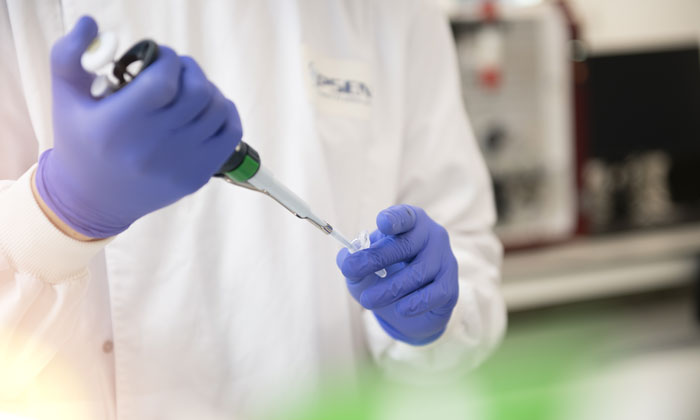
Ipsen oncology clinical trials
We are constantly striving to bring new treatments to the clinical trial stage to meet patients’ unmet medical needs.
Learn more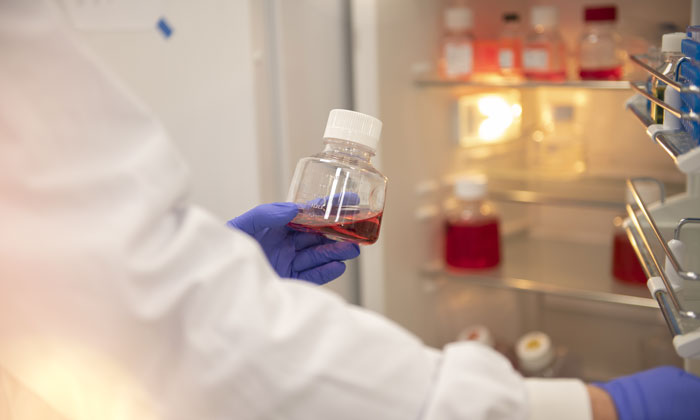
Our pipeline
Collaborating with like-minded partners, we are focused on developing first- and best-in-class treatments for people living with cancer who have high unmet medical need. Our teams strive to accelerate innovation to bring new treatment options to patients who need them most.
Learn more